
The Dopamine Advantage: Why Some Professionals Thrive While Others Stay Distracted


The Dopamine Advantage: Why Some Professionals Thrive While Others Stay Distracted
 By Inventive Minds Kidz Academy
 Added Fri, Jun 05 2026
By Inventive Minds Kidz Academy
Added Fri, Jun 05 2026
By Inventive Minds Kidz Academy
Added Fri, Jun 05 2026
Hey, Thanks For Subscribing!
Please check for a confirmation message and ensure you add us to a safe email list.
If you don't see a message in the next five minutes, check your spam or junk folders and mark our emails safe for next time.
See you soon!
Duplicate Email Found!
Well this is embarrassing... It looks like is already registered.
We have just sent an email to that address with a link to manage the subscription with us. If you don't see a message in the next five minutes, check the spam or junk folders, it's definitely there.
See you soon!

Understanding how the brain’s reward system shapes focus, decision-making, and long-term business performance
Most professionals do not suffer from a lack of ambition.
They have goals they genuinely care about. They want to build successful careers, grow businesses, lead teams effectively, and create meaningful work. Yet despite having clear objectives, many find themselves struggling with an increasingly common problem: maintaining focus on the activities that matter most.
Every knowledge worker has experienced some version of this challenge. The day begins with a clear priority—a strategic initiative that needs attention, an important proposal that must be completed, or a difficult decision that requires careful thought. Yet before meaningful progress is made, attention has already been pulled elsewhere. Emails demand responses. Messages arrive. Notifications appear. Industry news seems worth checking. Meetings consume large portions of the day.
By evening, a person may have been busy almost continuously while making surprisingly little progress on the work that creates the greatest long-term value.

The conventional explanation is that people need more discipline or motivation. However, modern neuroscience suggests a more nuanced interpretation. The problem is often not a lack of motivation. Instead, it may reflect a mismatch between how the brain’s reward system evolved and the environment in which modern professionals now operate.
At the center of this discussion lies dopamine.
While dopamine is frequently described as the brain’s “pleasure chemical,” research suggests its role is considerably more sophisticated. Dopamine influences how individuals evaluate opportunities, allocate attention, sustain effort, and pursue goals. Understanding how this system operates offers a useful lens for examining why some professionals sustain focus, make better long-term decisions, and consistently execute on meaningful goals while others struggle to do the same.
Dopamine Is About Pursuit, Not Just Pleasure
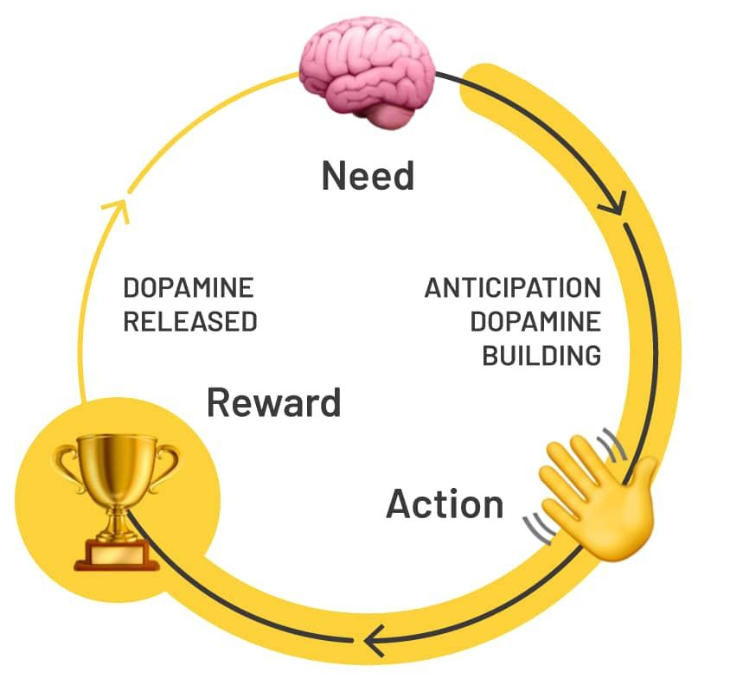
One of the most persistent misconceptions about dopamine is that it simply produces feelings of pleasure. Although dopamine plays an important role in reward-related processes, decades of research suggest that its primary function is more closely connected to anticipation and reward prediction than pleasure itself.
Research by neuroscientist Wolfram Schultz significantly advanced our understanding of this process. His work demonstrated that dopamine activity is strongly linked to the brain’s ability to predict rewards and update expectations based on outcomes. In practical terms, dopamine helps create the motivational pull that drives action before a reward is received.
This distinction has important implications for business performance.
Most meaningful professional achievements involve extended periods of effort before any reward becomes visible. Building a business, developing expertise, earning trust, launching a product, entering a new market, or leading organizational change all require sustained investment long before measurable results appear.
Yet every day, the brain must decide whether these activities are worth the effort they demand. The question is rarely conscious. Instead, the brain continuously evaluates where attention and energy should be directed. Activities that appear likely to produce rewarding outcomes receive greater motivational priority, while activities with distant or uncertain payoffs often struggle to compete.
Viewed through this lens, professional success becomes less about generating motivation and more about directing motivation toward activities that create long-term value.
The Modern Workplace Is Competing for Your Dopamine
If long-term success depends on sustained attention, modern work environments create a significant obstacle.
The contemporary workplace is saturated with stimuli designed to capture attention.
Emails, messaging platforms, social media feeds, news updates, collaboration tools, and digital notifications all compete for limited cognitive resources. Most of these interactions offer small but immediate rewards: a new piece of information, a response from a colleague, a social validation signal, or simply the satisfaction of resolving a pending task.
Individually, these rewards appear harmless. Collectively, they create an environment that constantly encourages the brain to prioritize immediate feedback over deeper forms of work.
The problem is not that communication tools are inherently harmful. Modern organizations depend on them. The challenge arises when immediate responsiveness becomes the dominant mode of operation.
Strategic planning rarely provides instant gratification. Deep analysis does not generate immediate rewards. Solving complex problems can require hours of uninterrupted concentration before meaningful progress becomes visible. Building relationships, developing expertise, and creating innovative products often involve prolonged periods of uncertainty.
Compared to the rapid feedback loops of digital communication, these activities can feel psychologically less rewarding in the short term.
As a result, many professionals become trapped in what appears to be productive activity but is actually reactive activity. Their days become filled with responses rather than creation, administration rather than strategy, and urgency rather than importance. Over time, reactive work can crowd out the deeper activities that drive innovation, strategic thinking, and long-term business performance.
Why Focus Has Become a Competitive Advantage
The economic value of sustained attention has increased dramatically over the past two decades.
In industrial economies, productivity often depended on physical resources and operational efficiency. In today’s knowledge economy, many of the highest-value activities depend on cognitive performance. Strategic thinking, innovation, leadership, negotiation, problem-solving, and decision-making all require the ability to sustain attention on complex challenges.
Research by Westbrook and Frank suggests that dopamine influences an individual’s willingness to invest cognitive effort. In other words, dopamine affects whether mentally demanding tasks feel worth the energy required to perform them.
This insight helps explain why focus has become such a critical differentiator.
High-performing professionals are not necessarily more intelligent than their peers. Nor are they always more motivated. In many cases, they have simply become more effective at protecting their attention from unnecessary fragmentation.
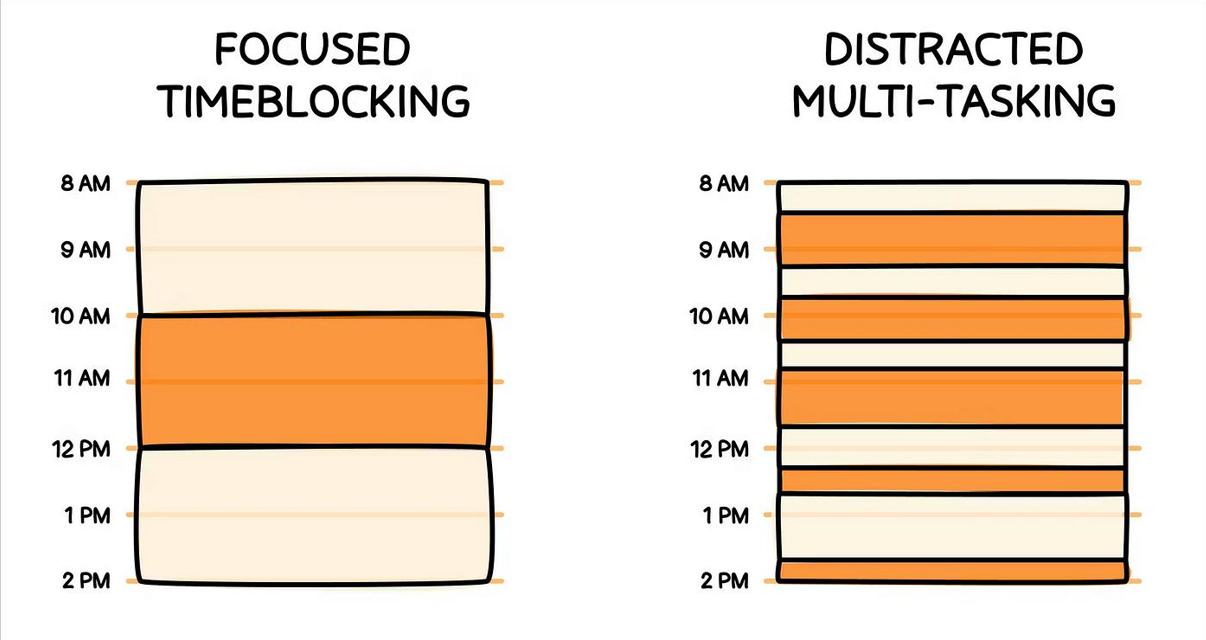
Every interruption imposes a cognitive cost. Attention must be redirected, context must be reconstructed, and mental momentum must be rebuilt. Although these costs may appear insignificant in isolation, their cumulative impact over weeks, months, and years can be substantial.
Sustained attention enables professionals to work through complexity, identify patterns, and generate insights that rarely emerge in fragmented periods of work. In an environment where distractions are abundant and attention is scarce, focus has become a genuine competitive advantage.
The Entrepreneur’s Challenge: Delayed Rewards
Few professional environments test the brain’s reward system more intensely than entrepreneurship.
Entrepreneurs routinely invest extraordinary amounts of effort without any guarantee of success. New ventures often require years of development before generating meaningful returns. Markets take time to penetrate. Brands take time to establish. Customer trust takes time to earn.
The challenge is that human beings naturally prefer rewards that are immediate and certain.
Research by Grogan and colleagues highlights an important distinction between reward-related behavior and instrumental motivation—the willingness to exert effort toward meaningful goals. This distinction is highly relevant to business.
Professionals who derive motivation exclusively from outcomes often struggle during periods of uncertainty, whereas those who learn to value progress itself are better equipped to sustain effort over long time horizons.
Incremental improvements, successful experiments, new insights, and gradual capability building all provide evidence that meaningful advancement is occurring, even when major results remain distant.
Many of the most successful companies were not built through a series of dramatic breakthroughs. They emerged from years of consistent execution, refinement, learning, and adaptation. The ability to remain committed during those periods may be one of the most valuable professional skills an entrepreneur can develop.
Dopamine, Decision-Making, and Business Judgment
Every business leader eventually encounters the same tension: whether to prioritize immediate results or invest in outcomes that may take years to materialize.
This challenge appears in many forms. Public companies face pressure to maximize quarterly performance while maintaining long-term competitiveness. Entrepreneurs must choose between rapid expansion and sustainable growth. Investors frequently decide whether to pursue speculative opportunities or patiently compound value over time.
Although these decisions appear financial or strategic on the surface, they are also psychological.
Research by Rutledge and colleagues suggests that dopamine-related systems play an important role in how individuals assess outcomes and subjective value. This matters because the brain often assigns greater weight to rewards that are immediate and certain than to rewards that are distant and uncertain.
Yet many of the most valuable business assets are built precisely through delayed returns. Reputation develops gradually. Trust accumulates over time. Expertise compounds through years of practice. Customer loyalty is earned through consistent delivery rather than isolated successes.
Effective judgment often requires resisting the attraction of immediate rewards in favor of decisions whose benefits may not become visible for months or years. While this approach can feel psychologically uncomfortable, it frequently distinguishes enduring success from short-lived performance.
Building a Business-Friendly Dopamine System
Understanding dopamine is useful, but understanding alone rarely changes behavior. The more practical question is how professionals can design environments that support sustained performance.
The first step is reducing unnecessary stimulation. Constant exposure to notifications, messages, and digital interruptions trains the brain to expect frequent rewards. Creating periods of uninterrupted work allows attention to stabilize and reduces dependence on continuous stimulation.
The second step is protecting time for deep work. High-value activities such as strategic thinking, writing, analysis, and problem-solving require extended periods of concentration. Organizations often focus on improving efficiency while overlooking the importance of creating conditions that enable focused cognitive work.
Third, large goals should be divided into visible milestones. One reason long-term projects lose momentum is that progress can be difficult to perceive. Breaking ambitious objectives into smaller measurable achievements creates intermediate rewards that help maintain engagement throughout extended projects. Many successful organizations apply this principle through quarterly objectives, sprint cycles, and milestone-based project management.
Fourth, professionals should reward consistency rather than outcomes alone. Outcomes are often influenced by variables beyond individual control. Consistent execution, however, remains largely within one’s influence. A process-oriented approach reduces dependence on external validation and supports long-term persistence.
Finally, professionals should regularly evaluate whether their daily activities reflect their stated priorities.
Many productivity challenges are not caused by poor intentions but by environments that repeatedly redirect effort toward less consequential work.
The Real Competitive Edge
Success in business is often explained through talent, intelligence, or motivation. While each of these factors matters, they are increasingly influenced by something more fundamental: where attention is directed.
Modern professionals operate in environments designed to reward immediacy, yet meaningful achievements rarely emerge from immediate rewards. They emerge from sustained effort, thoughtful decisions, and the ability to remain engaged with goals whose value may not become visible for some time.
The professionals who consistently thrive are often those who build systems, habits, and environments that support this kind of work.
The question is no longer whether you are motivated enough to succeed.
The real question is whether your daily environment is helping you pursue what matters—or merely what is immediate.
Authored by:
Rose Morsh
BA Child Development,
RECE, Family Professional,
Mediator, Arbitrator
References
-Grogan, J. P., Sandhu, T. R., Hu, M. T., & Manohar, S. G. (2020). Dopamine promotes instrumental motivation, but reduces reward-related vigour. eLife, 9, e58321.
-Rutledge, R. B., Skandali, N., Dayan, P., & Dolan, R. J. (2015). Dopaminergic modulation of decision making and subjective well-being. Journal of Neuroscience, 35(27), 9811–9822.
-Schultz, W. (2016). Dopamine reward prediction error coding. Dialogues in Clinical Neuroscience, 18(1), 23–32.
-Trenton, N. (2024). Master Your Dopamine: How to Rewire Your Brain for Focus and Peak Performance. PKCS Media.
-Westbrook, A., & Frank, M. J. (2018). Dopamine and proximity in motivation and cognitive control. Current Opinion in Behavioral Sciences, 22, 28–34.
Understanding how the brain’s reward system shapes focus, decision-making, and long-term business performance
Most professionals do not suffer from a lack of ambition.
They have goals they genuinely care about. They want to build successful careers, grow businesses, lead teams effectively, and create meaningful work. Yet despite having clear objectives, many find themselves struggling with an increasingly common problem: maintaining focus on the activities that matter most.
Every knowledge worker has experienced some version of this challenge. The day begins with a clear priority—a strategic initiative that needs attention, an important proposal that must be completed, or a difficult decision that requires careful thought. Yet before meaningful progress is made, attention has already been pulled elsewhere. Emails demand responses. Messages arrive. Notifications appear. Industry news seems worth checking. Meetings consume large portions of the day.
By evening, a person may have been busy almost continuously while making surprisingly little progress on the work that creates the greatest long-term value.
The conventional explanation is that people need more discipline or motivation. However, modern neuroscience suggests a more nuanced interpretation. The problem is often not a lack of motivation. Instead, it may reflect a mismatch between how the brain’s reward system evolved and the environment in which modern professionals now operate.
At the center of this discussion lies dopamine.
While dopamine is frequently described as the brain’s “pleasure chemical,” research suggests its role is considerably more sophisticated. Dopamine influences how individuals evaluate opportunities, allocate attention, sustain effort, and pursue goals. Understanding how this system operates offers a useful lens for examining why some professionals sustain focus, make better long-term decisions, and consistently execute on meaningful goals while others struggle to do the same.
Dopamine Is About Pursuit, Not Just Pleasure
One of the most persistent misconceptions about dopamine is that it simply produces feelings of pleasure. Although dopamine plays an important role in reward-related processes, decades of research suggest that its primary function is more closely connected to anticipation and reward prediction than pleasure itself.
Research by neuroscientist Wolfram Schultz significantly advanced our understanding of this process. His work demonstrated that dopamine activity is strongly linked to the brain’s ability to predict rewards and update expectations based on outcomes. In practical terms, dopamine helps create the motivational pull that drives action before a reward is received.
This distinction has important implications for business performance.
Most meaningful professional achievements involve extended periods of effort before any reward becomes visible. Building a business, developing expertise, earning trust, launching a product, entering a new market, or leading organizational change all require sustained investment long before measurable results appear.
Yet every day, the brain must decide whether these activities are worth the effort they demand. The question is rarely conscious. Instead, the brain continuously evaluates where attention and energy should be directed. Activities that appear likely to produce rewarding outcomes receive greater motivational priority, while activities with distant or uncertain payoffs often struggle to compete.
Viewed through this lens, professional success becomes less about generating motivation and more about directing motivation toward activities that create long-term value.
The Modern Workplace Is Competing for Your Dopamine
If long-term success depends on sustained attention, modern work environments create a significant obstacle.
The contemporary workplace is saturated with stimuli designed to capture attention.
Emails, messaging platforms, social media feeds, news updates, collaboration tools, and digital notifications all compete for limited cognitive resources. Most of these interactions offer small but immediate rewards: a new piece of information, a response from a colleague, a social validation signal, or simply the satisfaction of resolving a pending task.
Individually, these rewards appear harmless. Collectively, they create an environment that constantly encourages the brain to prioritize immediate feedback over deeper forms of work.
The problem is not that communication tools are inherently harmful. Modern organizations depend on them. The challenge arises when immediate responsiveness becomes the dominant mode of operation.
Strategic planning rarely provides instant gratification. Deep analysis does not generate immediate rewards. Solving complex problems can require hours of uninterrupted concentration before meaningful progress becomes visible. Building relationships, developing expertise, and creating innovative products often involve prolonged periods of uncertainty.
Compared to the rapid feedback loops of digital communication, these activities can feel psychologically less rewarding in the short term.
As a result, many professionals become trapped in what appears to be productive activity but is actually reactive activity. Their days become filled with responses rather than creation, administration rather than strategy, and urgency rather than importance. Over time, reactive work can crowd out the deeper activities that drive innovation, strategic thinking, and long-term business performance.
Why Focus Has Become a Competitive Advantage
The economic value of sustained attention has increased dramatically over the past two decades.
In industrial economies, productivity often depended on physical resources and operational efficiency. In today’s knowledge economy, many of the highest-value activities depend on cognitive performance. Strategic thinking, innovation, leadership, negotiation, problem-solving, and decision-making all require the ability to sustain attention on complex challenges.
Research by Westbrook and Frank suggests that dopamine influences an individual’s willingness to invest cognitive effort. In other words, dopamine affects whether mentally demanding tasks feel worth the energy required to perform them.
This insight helps explain why focus has become such a critical differentiator.
High-performing professionals are not necessarily more intelligent than their peers. Nor are they always more motivated. In many cases, they have simply become more effective at protecting their attention from unnecessary fragmentation.
Every interruption imposes a cognitive cost. Attention must be redirected, context must be reconstructed, and mental momentum must be rebuilt. Although these costs may appear insignificant in isolation, their cumulative impact over weeks, months, and years can be substantial.
Sustained attention enables professionals to work through complexity, identify patterns, and generate insights that rarely emerge in fragmented periods of work. In an environment where distractions are abundant and attention is scarce, focus has become a genuine competitive advantage.
The Entrepreneur’s Challenge: Delayed Rewards
Few professional environments test the brain’s reward system more intensely than entrepreneurship.
Entrepreneurs routinely invest extraordinary amounts of effort without any guarantee of success. New ventures often require years of development before generating meaningful returns. Markets take time to penetrate. Brands take time to establish. Customer trust takes time to earn.
The challenge is that human beings naturally prefer rewards that are immediate and certain.
Research by Grogan and colleagues highlights an important distinction between reward-related behavior and instrumental motivation—the willingness to exert effort toward meaningful goals. This distinction is highly relevant to business.
Professionals who derive motivation exclusively from outcomes often struggle during periods of uncertainty, whereas those who learn to value progress itself are better equipped to sustain effort over long time horizons.
Incremental improvements, successful experiments, new insights, and gradual capability building all provide evidence that meaningful advancement is occurring, even when major results remain distant.
Many of the most successful companies were not built through a series of dramatic breakthroughs. They emerged from years of consistent execution, refinement, learning, and adaptation. The ability to remain committed during those periods may be one of the most valuable professional skills an entrepreneur can develop.
Dopamine, Decision-Making, and Business Judgment
Every business leader eventually encounters the same tension: whether to prioritize immediate results or invest in outcomes that may take years to materialize.
This challenge appears in many forms. Public companies face pressure to maximize quarterly performance while maintaining long-term competitiveness. Entrepreneurs must choose between rapid expansion and sustainable growth. Investors frequently decide whether to pursue speculative opportunities or patiently compound value over time.
Although these decisions appear financial or strategic on the surface, they are also psychological.
Research by Rutledge and colleagues suggests that dopamine-related systems play an important role in how individuals assess outcomes and subjective value. This matters because the brain often assigns greater weight to rewards that are immediate and certain than to rewards that are distant and uncertain.
Yet many of the most valuable business assets are built precisely through delayed returns. Reputation develops gradually. Trust accumulates over time. Expertise compounds through years of practice. Customer loyalty is earned through consistent delivery rather than isolated successes.
Effective judgment often requires resisting the attraction of immediate rewards in favor of decisions whose benefits may not become visible for months or years. While this approach can feel psychologically uncomfortable, it frequently distinguishes enduring success from short-lived performance.
Building a Business-Friendly Dopamine System
Understanding dopamine is useful, but understanding alone rarely changes behavior. The more practical question is how professionals can design environments that support sustained performance.
The first step is reducing unnecessary stimulation. Constant exposure to notifications, messages, and digital interruptions trains the brain to expect frequent rewards. Creating periods of uninterrupted work allows attention to stabilize and reduces dependence on continuous stimulation.
The second step is protecting time for deep work. High-value activities such as strategic thinking, writing, analysis, and problem-solving require extended periods of concentration. Organizations often focus on improving efficiency while overlooking the importance of creating conditions that enable focused cognitive work.
Third, large goals should be divided into visible milestones. One reason long-term projects lose momentum is that progress can be difficult to perceive. Breaking ambitious objectives into smaller measurable achievements creates intermediate rewards that help maintain engagement throughout extended projects. Many successful organizations apply this principle through quarterly objectives, sprint cycles, and milestone-based project management.
Fourth, professionals should reward consistency rather than outcomes alone. Outcomes are often influenced by variables beyond individual control. Consistent execution, however, remains largely within one’s influence. A process-oriented approach reduces dependence on external validation and supports long-term persistence.
Finally, professionals should regularly evaluate whether their daily activities reflect their stated priorities.
Many productivity challenges are not caused by poor intentions but by environments that repeatedly redirect effort toward less consequential work.
The Real Competitive Edge
Success in business is often explained through talent, intelligence, or motivation. While each of these factors matters, they are increasingly influenced by something more fundamental: where attention is directed.
Modern professionals operate in environments designed to reward immediacy, yet meaningful achievements rarely emerge from immediate rewards. They emerge from sustained effort, thoughtful decisions, and the ability to remain engaged with goals whose value may not become visible for some time.
The professionals who consistently thrive are often those who build systems, habits, and environments that support this kind of work.
The question is no longer whether you are motivated enough to succeed.
The real question is whether your daily environment is helping you pursue what matters—or merely what is immediate.
Authored by:
Rose Morsh
BA Child Development,
RECE, Family Professional,
Mediator, Arbitrator
References
-Grogan, J. P., Sandhu, T. R., Hu, M. T., & Manohar, S. G. (2020). Dopamine promotes instrumental motivation, but reduces reward-related vigour. eLife, 9, e58321.
-Rutledge, R. B., Skandali, N., Dayan, P., & Dolan, R. J. (2015). Dopaminergic modulation of decision making and subjective well-being. Journal of Neuroscience, 35(27), 9811–9822.
-Schultz, W. (2016). Dopamine reward prediction error coding. Dialogues in Clinical Neuroscience, 18(1), 23–32.
-Trenton, N. (2024). Master Your Dopamine: How to Rewire Your Brain for Focus and Peak Performance. PKCS Media.
-Westbrook, A., & Frank, M. J. (2018). Dopamine and proximity in motivation and cognitive control. Current Opinion in Behavioral Sciences, 22, 28–34.
Most Talked About Posts

You May Also Like
Staff Picks

Adolescent Mental Health: How to Help Teenagers Find & Love Themselves

Using House Chores to Grow a More Resilient Child

Building Resilience: Using Behaviour Modification to Ease the Childcare Transition

Now Trending





Our Newsletter
Duplicate Email Found!
Well this is embarrassing... It looks like is already registered.
We have just sent an email to that address with a link to manage the subscription with us. If you don't see a message in the next five minutes, check the spam or junk folders, it's definitely there.
See you soon!

Join Our Newsletter
Hey, Thanks For Subscribing!
Please check for a confirmation message and ensure you add us to a safe email list.
If you don't see a message in the next five minutes, check your spam or junk folders and mark our emails safe for next time.
See you soon!
Duplicate Email Found!
Well this is embarrassing... It looks like is already registered.
We have just sent an email to that address with a link to manage the subscription with us. If you don't see a message in the next five minutes, check the spam or junk folders, it's definitely there.
See you soon!