
Why Most Ai Strategies Fail Before They Deliver Results


Why Most Ai Strategies Fail Before They Deliver Results
 By Inventive Minds Kidz Academy
 Added Wed, Aug 05 2026
By Inventive Minds Kidz Academy
Added Wed, Aug 05 2026
By Inventive Minds Kidz Academy
Added Wed, Aug 05 2026
Hey, Thanks For Subscribing!
Please check for a confirmation message and ensure you add us to a safe email list.
If you don't see a message in the next five minutes, check your spam or junk folders and mark our emails safe for next time.
See you soon!
Duplicate Email Found!
Well this is embarrassing... It looks like is already registered.
We have just sent an email to that address with a link to manage the subscription with us. If you don't see a message in the next five minutes, check the spam or junk folders, it's definitely there.
See you soon!

Artificial intelligence has become one of the biggest strategic priorities in modern business. Boards are approving larger technology budgets, executives are launching AI initiatives across every department, and employees are experimenting with new tools almost daily. According to McKinsey’s 2024 State of AI report, more than 70% of organizations have adopted AI in at least one business function, a dramatic increase from just a few years ago. Yet despite this rapid adoption, relatively few companies report seeing substantial business value across the enterprise.
This gap reveals an important truth.
The challenge is no longer gaining access to artificial intelligence. The challenge is knowing how to build an organization that can actually benefit from it.
That idea sits at the center of AI First: The Playbook for a Future-Proof Business and Brand by Adam Brotman and Andy Sack. Rather than presenting AI as another productivity tool, the authors argue that successful organizations must rethink how they operate from the ground up. Their message is surprisingly simple: companies that merely add AI to existing workflows may become slightly more efficient, but companies that redesign their business around AI have the opportunity to become fundamentally more competitive.
This distinction matters because AI is following a familiar economic pattern. Every major technology eventually becomes widely available. Cloud computing, smartphones, e-commerce platforms, and advanced analytics all began as competitive advantages before becoming standard business infrastructure. Artificial intelligence is likely to follow the same path. Within a few years, having access to powerful AI models will no longer differentiate organizations because nearly every competitor will have similar tools.
Competitive advantage will come from something much harder to copy.
The way an organization learns, adapts, and redesigns itself.
AI Is Changing Customers Faster Than It Is Changing Companies
Many executives evaluate AI primarily through the lens of operational efficiency. They ask whether automation can reduce costs, accelerate reporting, improve forecasting, or eliminate repetitive work. These are worthwhile objectives, but they overlook a much larger transformation already taking place.
AI is changing customer expectations faster than it is changing organizational behavior.
Consumers increasingly experience businesses that answer questions instantly, personalize recommendations in real time, anticipate problems before they occur, and provide seamless digital interactions. Once customers become accustomed to these experiences, they begin expecting the same level of responsiveness everywhere.
A healthcare provider is no longer compared only with other healthcare providers. A bank is no longer judged solely against competing banks. Every organization competes against the best customer experience people have encountered anywhere.
This shift explains why AI is becoming a strategic leadership issue rather than simply a technology initiative. Companies that continue operating with processes designed for a pre-AI world may still offer excellent products or services, yet appear slow, fragmented, or difficult to work with because customer expectations have evolved beyond their operating model.
The organizations creating lasting value will not necessarily automate the most tasks. They will redesign customer experiences around speed, personalization, and intelligent decision-making.
Why Many AI Projects Produce So Little Value
One of the most common misconceptions surrounding artificial intelligence is that success begins with choosing the right software platform.
In reality, technology is rarely the primary reason AI projects succeed or fail.
The more important question is whether the organization is prepared to change the way it works.
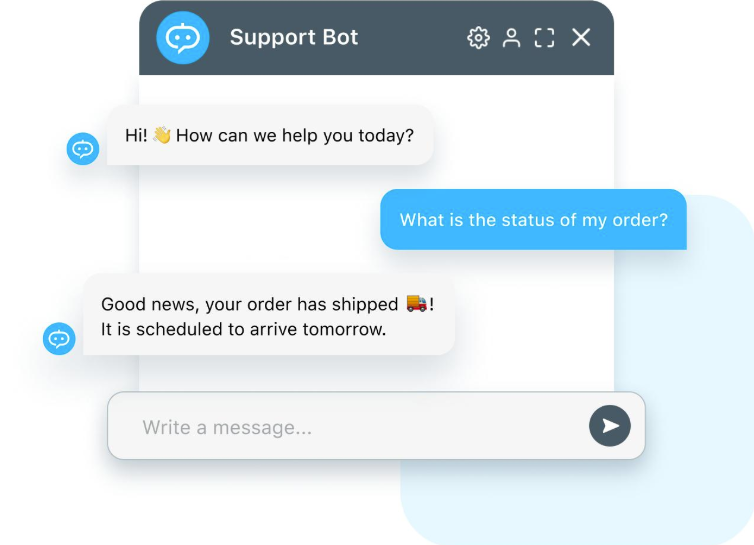
Consider customer support as an example. Many companies introduce AI chatbots hoping to reduce call volumes and improve response times. Sometimes these projects deliver measurable efficiencies. More often, however, they automate an inefficient process without questioning why customers require support in the first place.
An organization operating with an AI-first mindset approaches the problem differently.
Instead of asking how AI can answer repetitive questions faster, leaders ask why customers repeatedly encounter those problems at all. Could onboarding be redesigned? Could product information become more intuitive? Could predictive systems identify issues before customers even notice them?
The objective shifts from automating work to eliminating unnecessary work.
This difference may appear subtle, but it reflects two completely different leadership philosophies. One focuses on improving existing processes. The other questions whether those processes should continue to exist.
A practical example comes from Shopify. In 2025, CEO Tobias Lütke announced that teams requesting additional headcount would first need to demonstrate why artificial intelligence could not accomplish the work. His message was widely interpreted as an effort to reduce hiring, but the broader principle was more significant. Before adding more people, organizations should first challenge the assumptions underlying their existing workflows.
Not every business should adopt Shopify’s exact policy. Different industries face different operational realities. Nevertheless, the underlying lesson applies broadly: AI should encourage organizations to rethink work itself rather than simply accelerate familiar routines.
The companies likely to benefit most from artificial intelligence are not those purchasing the greatest number of AI applications. They are the ones willing to redesign how decisions are made, how teams collaborate, and how value reaches customers.
Technology Doesn’t Transform Businesses. Leadership Does.
If redesigning workflows is the first challenge of becoming AI-first, leading people through that redesign is the second—and often the more difficult—one.
This is where many organizations stumble.
Executives approve AI investments, technology teams deploy new tools, and employees attend training sessions. On paper, the transformation appears to be progressing well. Yet six months later, very little has changed. AI is being used occasionally, productivity improvements are modest, and the organization continues making decisions exactly as it did before.
The problem is rarely the technology itself.
More often, it is the assumption that organizational change naturally follows technological change.
Research consistently suggests otherwise. McKinsey’s State of AI reports have repeatedly found that organizations capturing the greatest value from AI share several characteristics beyond technical capability. Senior leadership actively champions adoption, employees receive continuous training, governance structures are established early, and AI initiatives remain closely connected to business objectives rather than operating as isolated technology projects.
These organizations understand that AI implementation is not an IT initiative with a defined finish line. It is an ongoing management capability.
Microsoft illustrates this principle well. Rather than positioning Copilot as a separate product that employees needed to adopt independently, Microsoft integrated AI into familiar applications such as Word, Excel, Outlook, Teams, and GitHub. Instead of asking employees to change where they worked, the company redesigned the tools they were already using. The technology became part of everyday workflows rather than another platform competing for attention.
This distinction reflects a broader leadership lesson.
Organizations rarely change because employees gain access to new technology. They change when leaders redesign incentives, expectations, decision-making processes, and everyday habits around that technology.
Without those changes, even the most sophisticated AI systems risk becoming expensive experiments rather than strategic assets.
An AI-First Strategy Must Also Recognize AI’s Limits
Much of today’s discussion around artificial intelligence emphasizes opportunity, but sustainable strategy also requires acknowledging limitations.
Generative AI can summarize documents, analyze large datasets, generate marketing copy, assist software development, and automate many routine administrative tasks. These capabilities create significant opportunities for productivity and innovation.
However, they do not eliminate uncertainty.
AI systems may generate inaccurate information with remarkable confidence. They depend heavily on data quality. They struggle with organizational context that exists only in people’s experience. Questions involving ethics, negotiation, trust, leadership, or long-term strategy still require human judgment that extends well beyond statistical prediction.
For that reason, becoming AI-first should never mean becoming AI-dependent.

The strongest organizations will likely adopt a balanced philosophy in which artificial intelligence handles repetitive analysis while people retain responsibility for judgment, accountability, and strategic direction.
This balance becomes particularly important in industries where decisions directly affect people’s lives, including healthcare, financial services, education, and legal practice. In these environments, AI should strengthen professional expertise—not replace it.
Organizations that forget this distinction risk automating decisions that require wisdom rather than computation.
Future-Proof Businesses Learn Faster Than Their Competitors
Perhaps the most valuable insight from AI First is that artificial intelligence is ultimately not the destination.
Organizational adaptability is.
Every major technological shift eventually reaches a point where access becomes widespread.
As AI tools become increasingly affordable and available, competitive advantage will depend less on owning better technology and more on building organizations capable of evolving continuously.
That requires a different style of leadership.
Instead of asking whether the company is “using AI,” leaders should ask more fundamental questions.
Which assumptions about our business no longer hold true?
Which customer experiences should be redesigned rather than merely accelerated?
Which employee capabilities will become more valuable as routine work becomes automated?
These questions move the conversation away from software procurement and toward organizational design.
They also recognize an important reality: the future belongs to organizations that can repeatedly reinvent themselves, not simply adopt the latest technology.
Artificial intelligence may prove to be one of the most significant business innovations of this generation. Yet technology alone has never guaranteed long-term success. Sustainable advantage has always depended on an organization’s ability to learn faster, adapt more intelligently, and continuously improve how it creates value.
As Adam Brotman and Andy Sack argue throughout AI First, becoming an AI-first company is not about putting artificial intelligence at the center of the business. It is about building a business capable of evolving alongside artificial intelligence.
Ultimately, AI will become available to almost everyone.
An organization that knows how to rethink itself every time the business environment changes will remain far more difficult to replicate. That capability—not the technology itself—is what will separate tomorrow’s market leaders from those that simply followed the AI trend.
Authored by:
Rose Morsh
BA Child Development,
RECE, Family Professional,
Mediator, Arbitrator
Artificial intelligence has become one of the biggest strategic priorities in modern business. Boards are approving larger technology budgets, executives are launching AI initiatives across every department, and employees are experimenting with new tools almost daily. According to McKinsey’s 2024 State of AI report, more than 70% of organizations have adopted AI in at least one business function, a dramatic increase from just a few years ago. Yet despite this rapid adoption, relatively few companies report seeing substantial business value across the enterprise.
This gap reveals an important truth.
The challenge is no longer gaining access to artificial intelligence. The challenge is knowing how to build an organization that can actually benefit from it.
That idea sits at the center of AI First: The Playbook for a Future-Proof Business and Brand by Adam Brotman and Andy Sack. Rather than presenting AI as another productivity tool, the authors argue that successful organizations must rethink how they operate from the ground up. Their message is surprisingly simple: companies that merely add AI to existing workflows may become slightly more efficient, but companies that redesign their business around AI have the opportunity to become fundamentally more competitive.
This distinction matters because AI is following a familiar economic pattern. Every major technology eventually becomes widely available. Cloud computing, smartphones, e-commerce platforms, and advanced analytics all began as competitive advantages before becoming standard business infrastructure. Artificial intelligence is likely to follow the same path. Within a few years, having access to powerful AI models will no longer differentiate organizations because nearly every competitor will have similar tools.
Competitive advantage will come from something much harder to copy.
The way an organization learns, adapts, and redesigns itself.
AI Is Changing Customers Faster Than It Is Changing Companies
Many executives evaluate AI primarily through the lens of operational efficiency. They ask whether automation can reduce costs, accelerate reporting, improve forecasting, or eliminate repetitive work. These are worthwhile objectives, but they overlook a much larger transformation already taking place.
AI is changing customer expectations faster than it is changing organizational behavior.
Consumers increasingly experience businesses that answer questions instantly, personalize recommendations in real time, anticipate problems before they occur, and provide seamless digital interactions. Once customers become accustomed to these experiences, they begin expecting the same level of responsiveness everywhere.
A healthcare provider is no longer compared only with other healthcare providers. A bank is no longer judged solely against competing banks. Every organization competes against the best customer experience people have encountered anywhere.
This shift explains why AI is becoming a strategic leadership issue rather than simply a technology initiative. Companies that continue operating with processes designed for a pre-AI world may still offer excellent products or services, yet appear slow, fragmented, or difficult to work with because customer expectations have evolved beyond their operating model.
The organizations creating lasting value will not necessarily automate the most tasks. They will redesign customer experiences around speed, personalization, and intelligent decision-making.
Why Many AI Projects Produce So Little Value
One of the most common misconceptions surrounding artificial intelligence is that success begins with choosing the right software platform.
In reality, technology is rarely the primary reason AI projects succeed or fail.
The more important question is whether the organization is prepared to change the way it works.
Consider customer support as an example. Many companies introduce AI chatbots hoping to reduce call volumes and improve response times. Sometimes these projects deliver measurable efficiencies. More often, however, they automate an inefficient process without questioning why customers require support in the first place.
An organization operating with an AI-first mindset approaches the problem differently.
Instead of asking how AI can answer repetitive questions faster, leaders ask why customers repeatedly encounter those problems at all. Could onboarding be redesigned? Could product information become more intuitive? Could predictive systems identify issues before customers even notice them?
The objective shifts from automating work to eliminating unnecessary work.
This difference may appear subtle, but it reflects two completely different leadership philosophies. One focuses on improving existing processes. The other questions whether those processes should continue to exist.
A practical example comes from Shopify. In 2025, CEO Tobias Lütke announced that teams requesting additional headcount would first need to demonstrate why artificial intelligence could not accomplish the work. His message was widely interpreted as an effort to reduce hiring, but the broader principle was more significant. Before adding more people, organizations should first challenge the assumptions underlying their existing workflows.
Not every business should adopt Shopify’s exact policy. Different industries face different operational realities. Nevertheless, the underlying lesson applies broadly: AI should encourage organizations to rethink work itself rather than simply accelerate familiar routines.
The companies likely to benefit most from artificial intelligence are not those purchasing the greatest number of AI applications. They are the ones willing to redesign how decisions are made, how teams collaborate, and how value reaches customers.
Technology Doesn’t Transform Businesses. Leadership Does.
If redesigning workflows is the first challenge of becoming AI-first, leading people through that redesign is the second—and often the more difficult—one.
This is where many organizations stumble.
Executives approve AI investments, technology teams deploy new tools, and employees attend training sessions. On paper, the transformation appears to be progressing well. Yet six months later, very little has changed. AI is being used occasionally, productivity improvements are modest, and the organization continues making decisions exactly as it did before.
The problem is rarely the technology itself.
More often, it is the assumption that organizational change naturally follows technological change.
Research consistently suggests otherwise. McKinsey’s State of AI reports have repeatedly found that organizations capturing the greatest value from AI share several characteristics beyond technical capability. Senior leadership actively champions adoption, employees receive continuous training, governance structures are established early, and AI initiatives remain closely connected to business objectives rather than operating as isolated technology projects.
These organizations understand that AI implementation is not an IT initiative with a defined finish line. It is an ongoing management capability.
Microsoft illustrates this principle well. Rather than positioning Copilot as a separate product that employees needed to adopt independently, Microsoft integrated AI into familiar applications such as Word, Excel, Outlook, Teams, and GitHub. Instead of asking employees to change where they worked, the company redesigned the tools they were already using. The technology became part of everyday workflows rather than another platform competing for attention.
This distinction reflects a broader leadership lesson.
Organizations rarely change because employees gain access to new technology. They change when leaders redesign incentives, expectations, decision-making processes, and everyday habits around that technology.
Without those changes, even the most sophisticated AI systems risk becoming expensive experiments rather than strategic assets.
An AI-First Strategy Must Also Recognize AI’s Limits
Much of today’s discussion around artificial intelligence emphasizes opportunity, but sustainable strategy also requires acknowledging limitations.
Generative AI can summarize documents, analyze large datasets, generate marketing copy, assist software development, and automate many routine administrative tasks. These capabilities create significant opportunities for productivity and innovation.
However, they do not eliminate uncertainty.
AI systems may generate inaccurate information with remarkable confidence. They depend heavily on data quality. They struggle with organizational context that exists only in people’s experience. Questions involving ethics, negotiation, trust, leadership, or long-term strategy still require human judgment that extends well beyond statistical prediction.
For that reason, becoming AI-first should never mean becoming AI-dependent.
The strongest organizations will likely adopt a balanced philosophy in which artificial intelligence handles repetitive analysis while people retain responsibility for judgment, accountability, and strategic direction.
This balance becomes particularly important in industries where decisions directly affect people’s lives, including healthcare, financial services, education, and legal practice. In these environments, AI should strengthen professional expertise—not replace it.
Organizations that forget this distinction risk automating decisions that require wisdom rather than computation.
Future-Proof Businesses Learn Faster Than Their Competitors
Perhaps the most valuable insight from AI First is that artificial intelligence is ultimately not the destination.
Organizational adaptability is.
Every major technological shift eventually reaches a point where access becomes widespread.
As AI tools become increasingly affordable and available, competitive advantage will depend less on owning better technology and more on building organizations capable of evolving continuously.
That requires a different style of leadership.
Instead of asking whether the company is “using AI,” leaders should ask more fundamental questions.
Which assumptions about our business no longer hold true?
Which customer experiences should be redesigned rather than merely accelerated?
Which employee capabilities will become more valuable as routine work becomes automated?
These questions move the conversation away from software procurement and toward organizational design.
They also recognize an important reality: the future belongs to organizations that can repeatedly reinvent themselves, not simply adopt the latest technology.
Artificial intelligence may prove to be one of the most significant business innovations of this generation. Yet technology alone has never guaranteed long-term success. Sustainable advantage has always depended on an organization’s ability to learn faster, adapt more intelligently, and continuously improve how it creates value.
As Adam Brotman and Andy Sack argue throughout AI First, becoming an AI-first company is not about putting artificial intelligence at the center of the business. It is about building a business capable of evolving alongside artificial intelligence.
Ultimately, AI will become available to almost everyone.
An organization that knows how to rethink itself every time the business environment changes will remain far more difficult to replicate. That capability—not the technology itself—is what will separate tomorrow’s market leaders from those that simply followed the AI trend.
Authored by:
Rose Morsh
BA Child Development,
RECE, Family Professional,
Mediator, Arbitrator
Most Talked About Posts

You May Also Like
Staff Picks

Second Year of Life: The Continuation of Development and What to Expect

Borrowed Beliefs: How Other People’s Expectations Quietly Shape Your Life

The Dopamine Advantage: Why Some Professionals Thrive While Others Stay Distracted

Now Trending





Our Newsletter
Duplicate Email Found!
Well this is embarrassing... It looks like is already registered.
We have just sent an email to that address with a link to manage the subscription with us. If you don't see a message in the next five minutes, check the spam or junk folders, it's definitely there.
See you soon!

Join Our Newsletter
Hey, Thanks For Subscribing!
Please check for a confirmation message and ensure you add us to a safe email list.
If you don't see a message in the next five minutes, check your spam or junk folders and mark our emails safe for next time.
See you soon!
Duplicate Email Found!
Well this is embarrassing... It looks like is already registered.
We have just sent an email to that address with a link to manage the subscription with us. If you don't see a message in the next five minutes, check the spam or junk folders, it's definitely there.
See you soon!