Why Great Teams Still Struggle—And What Exceptional Leaders Do Differently


Why Great Teams Still Struggle—And What Exceptional Leaders Do Differently
 By Inventive Minds Kidz Academy
 Added Wed, Jul 22 2026
By Inventive Minds Kidz Academy
Added Wed, Jul 22 2026
By Inventive Minds Kidz Academy
Added Wed, Jul 22 2026
Hey, Thanks For Subscribing!
Please check for a confirmation message and ensure you add us to a safe email list.
If you don't see a message in the next five minutes, check your spam or junk folders and mark our emails safe for next time.
See you soon!
Duplicate Email Found!
Well this is embarrassing... It looks like is already registered.
We have just sent an email to that address with a link to manage the subscription with us. If you don't see a message in the next five minutes, check the spam or junk folders, it's definitely there.
See you soon!

Every organization wants talented people. Companies compete to hire experienced professionals, invest heavily in leadership development, and introduce better systems and technologies, believing that stronger people and better processes naturally produce stronger results. Yet even organizations filled with capable individuals often experience the same frustrating problems: communication breaks down, collaboration slows, misunderstandings grow, and teams fail to reach their potential.

The reason is surprisingly simple. High-performing organizations are not built merely by hiring talented people—they are built by helping talented people work well together.
This idea is explored in When Working Together Doesn’t Work: An Enneagram Guide to Productive Relationships with Coworkers by Joey Stabile Schewee. While the book uses the Enneagram as a framework for understanding workplace relationships, its broader leadership message is far more universal. Teams rarely struggle because people are incompetent; they struggle because people approach work differently. The most successful organizations recognize these differences, understand them, and intentionally build cultures where diverse working styles strengthen performance instead of creating conflict.
In today’s business environment, where collaboration drives innovation more than individual expertise ever could, that capability has become a significant competitive advantage.
The Real Challenge Is Not Talent—It Is Alignment
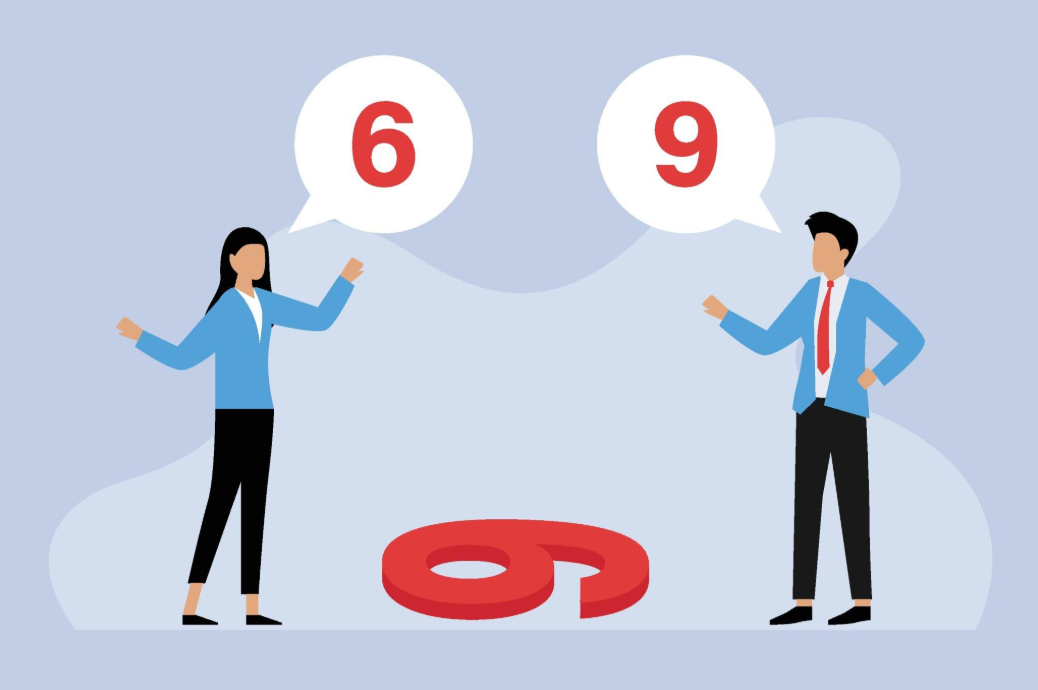
Most organizational problems are not caused by a lack of intelligence, experience, or commitment. More often, they emerge because capable people interpret situations through different perspectives.
One manager values speed and decisive action.
Another prefers careful analysis before making commitments.
One employee enjoys brainstorming openly with colleagues.
Another needs time to think independently before contributing ideas.
One team member is motivated by measurable results.
Another finds purpose in building strong relationships and creating consensus.
None of these approaches is inherently right or wrong. In fact, every successful organization needs all of them. Problems begin when people assume their preferred way of working is the only effective one.
What one person considers efficiency, another may experience as impatience.
What one sees as thoroughness, another interprets as unnecessary delay.
What appears to be resistance may simply be caution. What seems like overconfidence may simply reflect comfort with uncertainty.
Great leaders understand that many workplace conflicts are not personality conflicts at all—they are interpretation conflicts.
Beyond Personality Tests
Modern workplaces have become increasingly interested in personality assessments. These tools can provide useful insights, but effective leadership goes beyond labels.
The real question is not what type of person someone is.
The question is how they approach their work.
How do they make decisions?
How do they respond to change?
How do they communicate under pressure?
How do they solve problems?
How do they prefer to receive feedback?
Understanding these patterns gives leaders something far more valuable than a personality profile. It helps them predict where collaboration may flourish and where misunderstandings are likely to emerge.
Successful organizations recognize that people do not need to become more alike to work together effectively. They simply need to understand one another better.
That shift changes the role of leadership. Instead of trying to standardize people, leaders learn to coordinate differences.
The Hidden Cost of Misunderstanding
When organizations fail to recognize different working styles, the consequences extend far beyond occasional disagreements.
Projects become slower because communication breaks down.
Meetings become longer because people argue about approaches instead of objectives.
Innovation declines because employees hesitate to share ideas that differ from the dominant viewpoint.
Trust gradually weakens as colleagues begin attributing negative intentions to behaviors they simply do not understand.
These costs are rarely visible on a financial report, yet they quietly affect productivity, engagement, and employee retention.
Ironically, organizations often respond by introducing new policies, restructuring teams, or investing in additional technology. While these solutions may address operational issues, they rarely solve the underlying problem if people continue misunderstanding one another.
Culture is not determined by organizational charts.
It is shaped by everyday interactions between people who see the world differently.
Diversity of Thought Is a Strategic Asset
Many leaders unconsciously surround themselves with people who think like they do.
Similar people communicate easily.
They make decisions quickly.
Agreement comes naturally.
Yet similarity has limits.
Teams made up of people with identical perspectives often overlook important risks, challenge each other less, and become vulnerable to groupthink.
Organizations grow stronger when different perspectives are intentionally brought together.
Visionary thinkers identify future opportunities.
Operational experts transform ideas into reliable systems.
Analytical minds uncover hidden risks.
Relationship builders strengthen collaboration across teams.
Creative employees challenge assumptions.
Detail-oriented colleagues ensure quality and consistency.
The goal of leadership is not to eliminate these differences but to create an environment where they complement one another.
When organizations embrace diversity of thought instead of demanding uniformity, better decisions become far more likely.
Leadership as a Translator
One of the least recognized responsibilities of leadership is translation.
Leaders spend considerable time translating strategy into action, but they must also translate people to one another.
They help analytical employees understand why rapid decisions are sometimes necessary.
They help fast-moving teams appreciate why others ask difficult questions.
They encourage relationship-focused colleagues to recognize the value of constructive disagreement.
They remind highly task-oriented employees that trust is often built before results are achieved.
In other words, leaders create understanding before expecting collaboration.
This requires flexibility.
Some employees thrive with detailed guidance.
Others perform best when given broad objectives and the freedom to determine how to achieve them.
Some appreciate direct feedback immediately.
Others benefit from time to reflect before discussing improvements.
Adapting communication to individual needs is not inconsistency.
It is one of the clearest signs of leadership maturity.
The strongest leaders do not expect everyone to communicate like they do.
They learn to communicate in ways that allow others to perform at their best.

Building Organizations Where Collaboration Is Intentional
Healthy collaboration rarely happens by chance.
It is built through habits, systems, and leadership behaviors that encourage curiosity rather than assumption.
Organizations can strengthen collaboration by creating opportunities for employees from different departments or locations to work together on meaningful projects. These experiences expose people to different perspectives while building trust across the organization.
Regular project reviews should evaluate more than results alone. Teams should discuss how communication worked, where misunderstandings occurred, and what could improve future collaboration.
Managers should also encourage employees to explain their reasoning instead of defending their conclusions. Understanding how colleagues think often proves more valuable than simply knowing what they think.
Perhaps most importantly, organizations should reward curiosity.
When employees become comfortable asking, “Help me understand your perspective,” many unnecessary conflicts disappear before they escalate.
Over time, this creates a culture where differences become opportunities for learning rather than sources of frustration.
What This Means for Educational Organizations
Schools and childcare organizations illustrate these leadership principles particularly well because education depends almost entirely on human relationships.
Teachers, administrators, support staff, specialists, finance teams, and school leaders all approach challenges from different professional perspectives. Parents add another important voice, often bringing expectations shaped by their own experiences and priorities.
Without deliberate collaboration, these different viewpoints can easily become sources of tension.
With effective leadership, however, they become one of the organization’s greatest strengths.
This becomes even more important in school systems operating multiple campuses. When educators, principals, and leadership teams regularly exchange ideas, successful practices spread faster, innovation becomes more consistent, and organizational learning accelerates.
Educational excellence is therefore not achieved only through curriculum or facilities.
It is also built through the quality of collaboration among the people responsible for delivering that education every day.
Leading Beyond Similarity
Perhaps the most valuable lesson from When Working Together Doesn’t Work is that exceptional organizations do not search for perfect people.
They build environments where different people can succeed together.
Every workplace will include contrasting personalities, communication styles, motivations, and ways of solving problems. These differences are not signs of dysfunction—they are inevitable characteristics of healthy organizations.
The real question is whether leaders choose to ignore them or learn to lead through them.
Processes can be improved.
Technology can be upgraded.
Strategies can be copied.
But an organization that consistently helps different people understand, trust, and strengthen one another creates something competitors cannot easily replicate.
It creates a culture where collaboration becomes natural, innovation becomes continuous, and people perform better—not because they have become more alike, but because they have learned how to succeed together.
In the end, sustainable competitive advantage is rarely built on finding extraordinary individuals.
It is built on enabling ordinary people with different strengths to accomplish extraordinary things together.
Authored by:
Rose Morsh
BA Child Development,
RECE, Family Professional,
Mediator, Arbitrator
Every organization wants talented people. Companies compete to hire experienced professionals, invest heavily in leadership development, and introduce better systems and technologies, believing that stronger people and better processes naturally produce stronger results. Yet even organizations filled with capable individuals often experience the same frustrating problems: communication breaks down, collaboration slows, misunderstandings grow, and teams fail to reach their potential.
The reason is surprisingly simple. High-performing organizations are not built merely by hiring talented people—they are built by helping talented people work well together.
This idea is explored in When Working Together Doesn’t Work: An Enneagram Guide to Productive Relationships with Coworkers by Joey Stabile Schewee. While the book uses the Enneagram as a framework for understanding workplace relationships, its broader leadership message is far more universal. Teams rarely struggle because people are incompetent; they struggle because people approach work differently. The most successful organizations recognize these differences, understand them, and intentionally build cultures where diverse working styles strengthen performance instead of creating conflict.
In today’s business environment, where collaboration drives innovation more than individual expertise ever could, that capability has become a significant competitive advantage.
The Real Challenge Is Not Talent—It Is Alignment
Most organizational problems are not caused by a lack of intelligence, experience, or commitment. More often, they emerge because capable people interpret situations through different perspectives.
One manager values speed and decisive action.
Another prefers careful analysis before making commitments.
One employee enjoys brainstorming openly with colleagues.
Another needs time to think independently before contributing ideas.
One team member is motivated by measurable results.
Another finds purpose in building strong relationships and creating consensus.
None of these approaches is inherently right or wrong. In fact, every successful organization needs all of them. Problems begin when people assume their preferred way of working is the only effective one.
What one person considers efficiency, another may experience as impatience.
What one sees as thoroughness, another interprets as unnecessary delay.
What appears to be resistance may simply be caution. What seems like overconfidence may simply reflect comfort with uncertainty.
Great leaders understand that many workplace conflicts are not personality conflicts at all—they are interpretation conflicts.
Beyond Personality Tests
Modern workplaces have become increasingly interested in personality assessments. These tools can provide useful insights, but effective leadership goes beyond labels.
The real question is not what type of person someone is.
The question is how they approach their work.
How do they make decisions?
How do they respond to change?
How do they communicate under pressure?
How do they solve problems?
How do they prefer to receive feedback?
Understanding these patterns gives leaders something far more valuable than a personality profile. It helps them predict where collaboration may flourish and where misunderstandings are likely to emerge.
Successful organizations recognize that people do not need to become more alike to work together effectively. They simply need to understand one another better.
That shift changes the role of leadership. Instead of trying to standardize people, leaders learn to coordinate differences.
The Hidden Cost of Misunderstanding
When organizations fail to recognize different working styles, the consequences extend far beyond occasional disagreements.
Projects become slower because communication breaks down.
Meetings become longer because people argue about approaches instead of objectives.
Innovation declines because employees hesitate to share ideas that differ from the dominant viewpoint.
Trust gradually weakens as colleagues begin attributing negative intentions to behaviors they simply do not understand.
These costs are rarely visible on a financial report, yet they quietly affect productivity, engagement, and employee retention.
Ironically, organizations often respond by introducing new policies, restructuring teams, or investing in additional technology. While these solutions may address operational issues, they rarely solve the underlying problem if people continue misunderstanding one another.
Culture is not determined by organizational charts.
It is shaped by everyday interactions between people who see the world differently.
Diversity of Thought Is a Strategic Asset
Many leaders unconsciously surround themselves with people who think like they do.
Similar people communicate easily.
They make decisions quickly.
Agreement comes naturally.
Yet similarity has limits.
Teams made up of people with identical perspectives often overlook important risks, challenge each other less, and become vulnerable to groupthink.
Organizations grow stronger when different perspectives are intentionally brought together.
Visionary thinkers identify future opportunities.
Operational experts transform ideas into reliable systems.
Analytical minds uncover hidden risks.
Relationship builders strengthen collaboration across teams.
Creative employees challenge assumptions.
Detail-oriented colleagues ensure quality and consistency.
The goal of leadership is not to eliminate these differences but to create an environment where they complement one another.
When organizations embrace diversity of thought instead of demanding uniformity, better decisions become far more likely.
Leadership as a Translator
One of the least recognized responsibilities of leadership is translation.
Leaders spend considerable time translating strategy into action, but they must also translate people to one another.
They help analytical employees understand why rapid decisions are sometimes necessary.
They help fast-moving teams appreciate why others ask difficult questions.
They encourage relationship-focused colleagues to recognize the value of constructive disagreement.
They remind highly task-oriented employees that trust is often built before results are achieved.
In other words, leaders create understanding before expecting collaboration.
This requires flexibility.
Some employees thrive with detailed guidance.
Others perform best when given broad objectives and the freedom to determine how to achieve them.
Some appreciate direct feedback immediately.
Others benefit from time to reflect before discussing improvements.
Adapting communication to individual needs is not inconsistency.
It is one of the clearest signs of leadership maturity.
The strongest leaders do not expect everyone to communicate like they do.
They learn to communicate in ways that allow others to perform at their best.
Building Organizations Where Collaboration Is Intentional
Healthy collaboration rarely happens by chance.
It is built through habits, systems, and leadership behaviors that encourage curiosity rather than assumption.
Organizations can strengthen collaboration by creating opportunities for employees from different departments or locations to work together on meaningful projects. These experiences expose people to different perspectives while building trust across the organization.
Regular project reviews should evaluate more than results alone. Teams should discuss how communication worked, where misunderstandings occurred, and what could improve future collaboration.
Managers should also encourage employees to explain their reasoning instead of defending their conclusions. Understanding how colleagues think often proves more valuable than simply knowing what they think.
Perhaps most importantly, organizations should reward curiosity.
When employees become comfortable asking, “Help me understand your perspective,” many unnecessary conflicts disappear before they escalate.
Over time, this creates a culture where differences become opportunities for learning rather than sources of frustration.
What This Means for Educational Organizations
Schools and childcare organizations illustrate these leadership principles particularly well because education depends almost entirely on human relationships.
Teachers, administrators, support staff, specialists, finance teams, and school leaders all approach challenges from different professional perspectives. Parents add another important voice, often bringing expectations shaped by their own experiences and priorities.
Without deliberate collaboration, these different viewpoints can easily become sources of tension.
With effective leadership, however, they become one of the organization’s greatest strengths.
This becomes even more important in school systems operating multiple campuses. When educators, principals, and leadership teams regularly exchange ideas, successful practices spread faster, innovation becomes more consistent, and organizational learning accelerates.
Educational excellence is therefore not achieved only through curriculum or facilities.
It is also built through the quality of collaboration among the people responsible for delivering that education every day.
Leading Beyond Similarity
Perhaps the most valuable lesson from When Working Together Doesn’t Work is that exceptional organizations do not search for perfect people.
They build environments where different people can succeed together.
Every workplace will include contrasting personalities, communication styles, motivations, and ways of solving problems. These differences are not signs of dysfunction—they are inevitable characteristics of healthy organizations.
The real question is whether leaders choose to ignore them or learn to lead through them.
Processes can be improved.
Technology can be upgraded.
Strategies can be copied.
But an organization that consistently helps different people understand, trust, and strengthen one another creates something competitors cannot easily replicate.
It creates a culture where collaboration becomes natural, innovation becomes continuous, and people perform better—not because they have become more alike, but because they have learned how to succeed together.
In the end, sustainable competitive advantage is rarely built on finding extraordinary individuals.
It is built on enabling ordinary people with different strengths to accomplish extraordinary things together.
Authored by:
Rose Morsh
BA Child Development,
RECE, Family Professional,
Mediator, Arbitrator
Most Talked About Posts

You May Also Like
Staff Picks

Measles, Vaccination and The Recent Global Surge

Second Year of Life: The Continuation of Development and What to Expect

Can Wearing a Mask Affect Children's Mental Health

Now Trending




Our Newsletter
Duplicate Email Found!
Well this is embarrassing... It looks like is already registered.
We have just sent an email to that address with a link to manage the subscription with us. If you don't see a message in the next five minutes, check the spam or junk folders, it's definitely there.
See you soon!

Join Our Newsletter
Hey, Thanks For Subscribing!
Please check for a confirmation message and ensure you add us to a safe email list.
If you don't see a message in the next five minutes, check your spam or junk folders and mark our emails safe for next time.
See you soon!
Duplicate Email Found!
Well this is embarrassing... It looks like is already registered.
We have just sent an email to that address with a link to manage the subscription with us. If you don't see a message in the next five minutes, check the spam or junk folders, it's definitely there.
See you soon!