Show Your Work: Why Great Educational Organizations Make Learning Visible


Show Your Work: Why Great Educational Organizations Make Learning Visible
 By Inventive Minds Kidz Academy
 Added Mon, Jun 22 2026
By Inventive Minds Kidz Academy
Added Mon, Jun 22 2026
By Inventive Minds Kidz Academy
Added Mon, Jun 22 2026
Hey, Thanks For Subscribing!
Please check for a confirmation message and ensure you add us to a safe email list.
If you don't see a message in the next five minutes, check your spam or junk folders and mark our emails safe for next time.
See you soon!
Duplicate Email Found!
Well this is embarrassing... It looks like is already registered.
We have just sent an email to that address with a link to manage the subscription with us. If you don't see a message in the next five minutes, check the spam or junk folders, it's definitely there.
See you soon!

Every day, millions of parents drop their children off at schools and childcare centres with an extraordinary amount of trust.
They trust that meaningful learning will happen. They trust that educators will nurture growth, curiosity, and confidence. They trust that the environment will support their child’s development in ways that may not be immediately visible.
Yet one of the greatest challenges in education is that much of its most important work happens behind closed doors.
Parents see report cards, completed projects, assessment results, and occasional classroom updates. What they often do not see are the countless moments that make those outcomes possible: the thoughtful questions that spark curiosity, the small breakthroughs that build confidence, the mistakes that become learning opportunities, and the daily interactions that gradually shape a child’s growth.
This challenge sits at the heart of an idea explored in Austin Kleon’s bestselling book Show Your Work!. Although the book was written primarily for artists, creators, and entrepreneurs, its central message carries important lessons for educational organizations.
Kleon argues that people should not hide their process until the final product is complete. Instead, they should openly share their learning, their thinking, their experiments, and even their struggles. In his view, meaningful work becomes more valuable when people can see how it happens.
For schools and childcare organizations, this insight is particularly relevant. Education is not simply about producing outcomes. It is about guiding a developmental journey. When that journey remains invisible, much of the value of education remains invisible as well.
The strongest educational organizations understand that trust is not built through polished marketing messages alone. It is built when families can see learning in action.
The Core Idea Behind Show Your Work!
At first glance, Show Your Work! appears to be a book about personal branding. Many readers encounter it through discussions about social media, content creation, or professional visibility.
However, the book’s deeper message is far more significant.
Kleon challenges the common belief that people should work privately, perfect their craft, and reveal only the finished result. He argues that this approach misses an important opportunity. Audiences are not only interested in outcomes. They are interested in the process that produces those outcomes.
The sketches behind a painting, the drafts behind a book, the experiments behind a discovery, and the lessons learned through failure often hold as much value as the final achievement itself.
Rather than promoting self-promotion, Kleon advocates for transparency. He encourages people to share what they are learning, document their progress, and contribute knowledge to their communities.
This philosophy is surprisingly relevant to education.
Schools are not factories producing standardized outputs. They are dynamic learning environments where growth occurs gradually, often in ways that are difficult to measure. If learning remains hidden until the final result appears, families and even students themselves may miss the richness of the educational process.
In many ways, educational organizations face the same challenge that creators face. Their most valuable work often happens out of sight.
Education Has a Visibility Problem
Many schools do exceptional work every day.
Teachers design engaging lessons. Educators support children’s emotional development. Classrooms become places where confidence, resilience, and curiosity grow.
Yet much of this work remains invisible to the people who care about it most.
Parents typically encounter education through snapshots: report cards, parent-teacher meetings, newsletters, photographs, and occasional performances. While these touchpoints are valuable, they often represent only a fraction of what actually occurs.
The reality is that learning is rarely a single event.
A child does not suddenly become a reader. Reading develops through hundreds of small moments of practice, challenge, correction, and encouragement.

A student does not suddenly become a confident communicator. Confidence emerges through repeated opportunities to speak, listen, collaborate, and reflect.
The same is true for problem-solving, creativity, leadership, and critical thinking.
When educational organizations focus exclusively on outcomes, they risk hiding the very processes that create those outcomes.
This can create a disconnect. Families may appreciate results without fully understanding how those results were achieved. Students may celebrate success without recognizing the effort that made success possible.
Making learning visible helps bridge that gap.
Why Great Schools Make Learning Visible
The most effective educational organizations understand that visibility is not simply a communication strategy. It is an educational strategy.
When learning becomes visible, trust grows stronger.
Parents gain a clearer understanding of what happens during the school day. Instead of relying solely on outcomes, they can observe the experiences, interactions, and practices that contribute to growth. This creates confidence not only in the results, but in the process itself.
Visibility also benefits students.
When children can see evidence of their own development, they begin to understand that learning is a journey rather than a destination. They become more aware of their progress, more reflective about their challenges, and more resilient when mistakes occur.
Perhaps most importantly, visible learning helps create stronger educational cultures.
When educators document their practices, share their insights, and reflect openly on their work, knowledge spreads throughout the organization. Successful approaches become easier to replicate. New ideas emerge more quickly. Improvement becomes a collective effort rather than an individual one.
This is particularly important for organizations operating multiple schools or childcare centres. Consistency and quality become easier to achieve when effective practices are visible and shared.
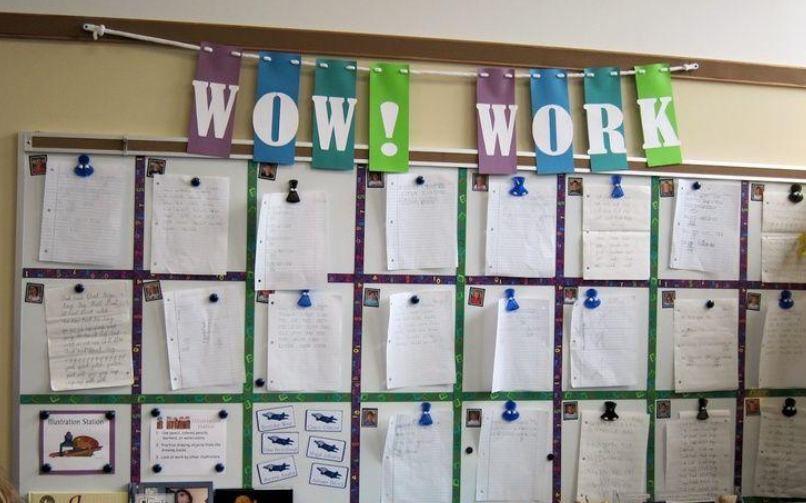
- Create a “Transparency Wall” for Educators
One practical way to apply Kleon’s philosophy inside a school or childcare organization is to create a culture where educators openly share lessons learned—not just successes.
Rather than celebrating only high-performing classrooms or successful initiatives, leaders can encourage educators to share small experiments that did not go as planned and what they learned from them. A weekly internal “Transparency Wall” or digital learning forum can become a space where teachers discuss challenges, unexpected outcomes, and adjustments they made along the way.
This reflects Kleon’s idea of sharing the “process” rather than simply displaying polished results. Over time, such practices build psychological safety, accelerate organizational learning, and create a culture of continuous improvement.
2. Share the “Why” Behind the Work
Many schools communicate with families through highly polished newsletters and marketing materials. While useful, these often show outcomes without explaining the thinking behind them.
A more powerful approach is to regularly share small behind-the-scenes moments that reveal how learning actually happens. For example, a short video of an educator facilitating open-ended questions during play can be accompanied by a simple explanation of how that interaction supports language development, curiosity, and critical thinking.
This approach transforms communication from promotion into education. Parents gain a deeper understanding of the school’s philosophy, educators receive recognition for their professional expertise, and trust grows because families can see the learning process rather than just the final product.
As Kleon argues throughout Show Your Work!, people connect more deeply with authentic journeys than with polished outcomes alone.
What This Means for Running a School or Childcare Organization
As educational organizations grow, maintaining trust becomes increasingly complex.
A single classroom can build relationships through daily interactions. A network of schools or childcare centres must build trust at scale.
Many organizations attempt to solve this challenge through marketing. They invest in advertising campaigns, promotional materials, and carefully crafted messaging.
While communication matters, trust ultimately depends on something deeper.
People trust what they understand.
They trust what they can see.
They trust organizations that are willing to open the door and explain not only what they do, but why they do it.
For educational leaders, this means creating systems that make learning visible. It means documenting growth rather than simply reporting results. It means sharing educational philosophy rather than relying on slogans. It means helping families understand the thinking behind programs, decisions, and classroom practices.
The organizations that thrive in the future may not be those with the most impressive marketing campaigns. They may be those that are most willing to share their work openly and authentically.
In this sense, Show Your Work! offers more than communication advice. It offers a framework for building trust, strengthening culture, and creating educational organizations that are transparent, reflective, and deeply connected to the communities they serve.
Conclusion
Austin Kleon wrote Show Your Work! for creators seeking to share their ideas with the world.
Yet its lessons extend far beyond the creative industries.
For schools and childcare organizations, the book highlights an important truth: some of the most valuable work in education is also the least visible.
The challenge for educational leaders is not simply to produce excellent outcomes.
It is to make the journey behind those outcomes visible to students, families, educators, and communities.
When learning becomes visible, trust grows.
When growth becomes visible, confidence grows.
And when educational organizations are willing to share their thinking, their practices, and their progress, they create something far more powerful than a marketing message.
They create a culture of learning that everyone can see, understand, and believe in.
Authored by:
Rose Morsh
BA Child Development,
RECE, Family Professional,
Mediator, Arbitrator
Every day, millions of parents drop their children off at schools and childcare centres with an extraordinary amount of trust.
They trust that meaningful learning will happen. They trust that educators will nurture growth, curiosity, and confidence. They trust that the environment will support their child’s development in ways that may not be immediately visible.
Yet one of the greatest challenges in education is that much of its most important work happens behind closed doors.
Parents see report cards, completed projects, assessment results, and occasional classroom updates. What they often do not see are the countless moments that make those outcomes possible: the thoughtful questions that spark curiosity, the small breakthroughs that build confidence, the mistakes that become learning opportunities, and the daily interactions that gradually shape a child’s growth.
This challenge sits at the heart of an idea explored in Austin Kleon’s bestselling book Show Your Work!. Although the book was written primarily for artists, creators, and entrepreneurs, its central message carries important lessons for educational organizations.
Kleon argues that people should not hide their process until the final product is complete. Instead, they should openly share their learning, their thinking, their experiments, and even their struggles. In his view, meaningful work becomes more valuable when people can see how it happens.
For schools and childcare organizations, this insight is particularly relevant. Education is not simply about producing outcomes. It is about guiding a developmental journey. When that journey remains invisible, much of the value of education remains invisible as well.
The strongest educational organizations understand that trust is not built through polished marketing messages alone. It is built when families can see learning in action.
The Core Idea Behind Show Your Work!
At first glance, Show Your Work! appears to be a book about personal branding. Many readers encounter it through discussions about social media, content creation, or professional visibility.
However, the book’s deeper message is far more significant.
Kleon challenges the common belief that people should work privately, perfect their craft, and reveal only the finished result. He argues that this approach misses an important opportunity. Audiences are not only interested in outcomes. They are interested in the process that produces those outcomes.
The sketches behind a painting, the drafts behind a book, the experiments behind a discovery, and the lessons learned through failure often hold as much value as the final achievement itself.
Rather than promoting self-promotion, Kleon advocates for transparency. He encourages people to share what they are learning, document their progress, and contribute knowledge to their communities.
This philosophy is surprisingly relevant to education.
Schools are not factories producing standardized outputs. They are dynamic learning environments where growth occurs gradually, often in ways that are difficult to measure. If learning remains hidden until the final result appears, families and even students themselves may miss the richness of the educational process.
In many ways, educational organizations face the same challenge that creators face. Their most valuable work often happens out of sight.
Education Has a Visibility Problem
Many schools do exceptional work every day.
Teachers design engaging lessons. Educators support children’s emotional development. Classrooms become places where confidence, resilience, and curiosity grow.
Yet much of this work remains invisible to the people who care about it most.
Parents typically encounter education through snapshots: report cards, parent-teacher meetings, newsletters, photographs, and occasional performances. While these touchpoints are valuable, they often represent only a fraction of what actually occurs.
The reality is that learning is rarely a single event.
A child does not suddenly become a reader. Reading develops through hundreds of small moments of practice, challenge, correction, and encouragement.
A student does not suddenly become a confident communicator. Confidence emerges through repeated opportunities to speak, listen, collaborate, and reflect.
The same is true for problem-solving, creativity, leadership, and critical thinking.
When educational organizations focus exclusively on outcomes, they risk hiding the very processes that create those outcomes.
This can create a disconnect. Families may appreciate results without fully understanding how those results were achieved. Students may celebrate success without recognizing the effort that made success possible.
Making learning visible helps bridge that gap.
Why Great Schools Make Learning Visible
The most effective educational organizations understand that visibility is not simply a communication strategy. It is an educational strategy.
When learning becomes visible, trust grows stronger.
Parents gain a clearer understanding of what happens during the school day. Instead of relying solely on outcomes, they can observe the experiences, interactions, and practices that contribute to growth. This creates confidence not only in the results, but in the process itself.
Visibility also benefits students.
When children can see evidence of their own development, they begin to understand that learning is a journey rather than a destination. They become more aware of their progress, more reflective about their challenges, and more resilient when mistakes occur.
Perhaps most importantly, visible learning helps create stronger educational cultures.
When educators document their practices, share their insights, and reflect openly on their work, knowledge spreads throughout the organization. Successful approaches become easier to replicate. New ideas emerge more quickly. Improvement becomes a collective effort rather than an individual one.
This is particularly important for organizations operating multiple schools or childcare centres. Consistency and quality become easier to achieve when effective practices are visible and shared.
- Create a “Transparency Wall” for Educators
One practical way to apply Kleon’s philosophy inside a school or childcare organization is to create a culture where educators openly share lessons learned—not just successes.
Rather than celebrating only high-performing classrooms or successful initiatives, leaders can encourage educators to share small experiments that did not go as planned and what they learned from them. A weekly internal “Transparency Wall” or digital learning forum can become a space where teachers discuss challenges, unexpected outcomes, and adjustments they made along the way.
This reflects Kleon’s idea of sharing the “process” rather than simply displaying polished results. Over time, such practices build psychological safety, accelerate organizational learning, and create a culture of continuous improvement.
2. Share the “Why” Behind the Work
Many schools communicate with families through highly polished newsletters and marketing materials. While useful, these often show outcomes without explaining the thinking behind them.
A more powerful approach is to regularly share small behind-the-scenes moments that reveal how learning actually happens. For example, a short video of an educator facilitating open-ended questions during play can be accompanied by a simple explanation of how that interaction supports language development, curiosity, and critical thinking.
This approach transforms communication from promotion into education. Parents gain a deeper understanding of the school’s philosophy, educators receive recognition for their professional expertise, and trust grows because families can see the learning process rather than just the final product.
As Kleon argues throughout Show Your Work!, people connect more deeply with authentic journeys than with polished outcomes alone.
What This Means for Running a School or Childcare Organization
As educational organizations grow, maintaining trust becomes increasingly complex.
A single classroom can build relationships through daily interactions. A network of schools or childcare centres must build trust at scale.
Many organizations attempt to solve this challenge through marketing. They invest in advertising campaigns, promotional materials, and carefully crafted messaging.
While communication matters, trust ultimately depends on something deeper.
People trust what they understand.
They trust what they can see.
They trust organizations that are willing to open the door and explain not only what they do, but why they do it.
For educational leaders, this means creating systems that make learning visible. It means documenting growth rather than simply reporting results. It means sharing educational philosophy rather than relying on slogans. It means helping families understand the thinking behind programs, decisions, and classroom practices.
The organizations that thrive in the future may not be those with the most impressive marketing campaigns. They may be those that are most willing to share their work openly and authentically.
In this sense, Show Your Work! offers more than communication advice. It offers a framework for building trust, strengthening culture, and creating educational organizations that are transparent, reflective, and deeply connected to the communities they serve.
Conclusion
Austin Kleon wrote Show Your Work! for creators seeking to share their ideas with the world.
Yet its lessons extend far beyond the creative industries.
For schools and childcare organizations, the book highlights an important truth: some of the most valuable work in education is also the least visible.
The challenge for educational leaders is not simply to produce excellent outcomes.
It is to make the journey behind those outcomes visible to students, families, educators, and communities.
When learning becomes visible, trust grows.
When growth becomes visible, confidence grows.
And when educational organizations are willing to share their thinking, their practices, and their progress, they create something far more powerful than a marketing message.
They create a culture of learning that everyone can see, understand, and believe in.
Authored by:
Rose Morsh
BA Child Development,
RECE, Family Professional,
Mediator, Arbitrator
Most Talked About Posts

You May Also Like
Staff Picks
Helping Your Kids Develop a Love for Learning

Why Most Ai Strategies Fail Before They Deliver Results

How Cognitive and Mathematical Skills Develop from Infancy to Early Childhood — And What Parents Can Do at Home

Now Trending





Our Newsletter
Duplicate Email Found!
Well this is embarrassing... It looks like is already registered.
We have just sent an email to that address with a link to manage the subscription with us. If you don't see a message in the next five minutes, check the spam or junk folders, it's definitely there.
See you soon!

Join Our Newsletter
Hey, Thanks For Subscribing!
Please check for a confirmation message and ensure you add us to a safe email list.
If you don't see a message in the next five minutes, check your spam or junk folders and mark our emails safe for next time.
See you soon!
Duplicate Email Found!
Well this is embarrassing... It looks like is already registered.
We have just sent an email to that address with a link to manage the subscription with us. If you don't see a message in the next five minutes, check the spam or junk folders, it's definitely there.
See you soon!