Thinking In Probabilities: Better Decisions For Better Schools


Thinking In Probabilities: Better Decisions For Better Schools
 By Inventive Minds Kidz Academy
 Added Fri, Jul 03 2026
By Inventive Minds Kidz Academy
Added Fri, Jul 03 2026
By Inventive Minds Kidz Academy
Added Fri, Jul 03 2026
Hey, Thanks For Subscribing!
Please check for a confirmation message and ensure you add us to a safe email list.
If you don't see a message in the next five minutes, check your spam or junk folders and mark our emails safe for next time.
See you soon!
Duplicate Email Found!
Well this is embarrassing... It looks like is already registered.
We have just sent an email to that address with a link to manage the subscription with us. If you don't see a message in the next five minutes, check the spam or junk folders, it's definitely there.
See you soon!

Running a successful school or childcare organization has never been about eliminating uncertainty. Every important decision—from opening a new campus to hiring educators, investing in technology, setting tuition, or expanding into a new community—is made without complete information. Markets change, demographics shift, regulations evolve, and families’ expectations continue to grow.
As Mark Prell argues in What Are the Odds?: A Statistical Guide to Certainty in an Uncertain World, the real challenge is not uncertainty itself. It is how we respond to it. While the future will always contain unknowns, the quality of our decisions does not have to be uncertain too. Organizations that understand probability, recognize cognitive bias, and use evidence effectively are far more likely to make sound decisions than those that rely primarily on intuition or past experience.
For leaders of schools and large childcare organizations, this lesson is particularly important. Education is deeply human, but managing educational institutions also requires disciplined thinking. Every strategic decision carries financial, operational, and educational consequences that affect not only the organization but also thousands of children, families, and educators.
The strongest educational organizations are rarely those that can predict the future perfectly. They are the ones that consistently make better decisions despite an imperfect future.

The Problem Isn’t Uncertainty—It’s How We Think About It
One of Prell’s central messages is surprisingly reassuring: uncertainty is unavoidable, but poor reasoning is not.
People naturally seek certainty. We prefer clear answers over probabilities, confident predictions over nuanced judgments, and simple stories over complex realities. Yet the world rarely behaves that way.
Instead of asking, “What will happen?”, better decision-makers ask, “What is most likely to happen, and how confident are we?”
That shift may sound subtle, but it fundamentally changes how organizations operate. Probability is not about predicting the future with perfect accuracy. It is about making decisions using the best evidence currently available while recognizing that every forecast contains some level of uncertainty.
For educational leaders, this mindset can transform planning.
Rather than assuming next year’s enrolment will increase because it did last year, leaders examine demographic trends, local housing developments, birth rates, historical enrolment patterns, competitive activity, and multiple possible scenarios.
Rather than believing a new program will automatically improve outcomes, they establish measurable indicators, monitor progress, and remain willing to adjust when evidence points in a different direction.
Thinking probabilistically replaces certainty with preparedness.
Why Educational Leaders Often Misjudge Risk
Managing a school network requires hundreds of decisions every year, yet many are influenced by predictable cognitive biases rather than objective evidence.
A particularly successful open house may create the impression that enrolment demand is booming, even if broader data suggests otherwise. One negative parent complaint can suddenly feel like evidence of widespread dissatisfaction despite overwhelmingly positive feedback. A recent staffing shortage may lead leaders to overestimate future hiring difficulties simply because the experience remains vivid in memory.
Psychologists refer to these mental shortcuts as cognitive biases, and Prell demonstrates how they consistently distort judgment.
The availability bias causes memorable events to seem more common than they actually are.
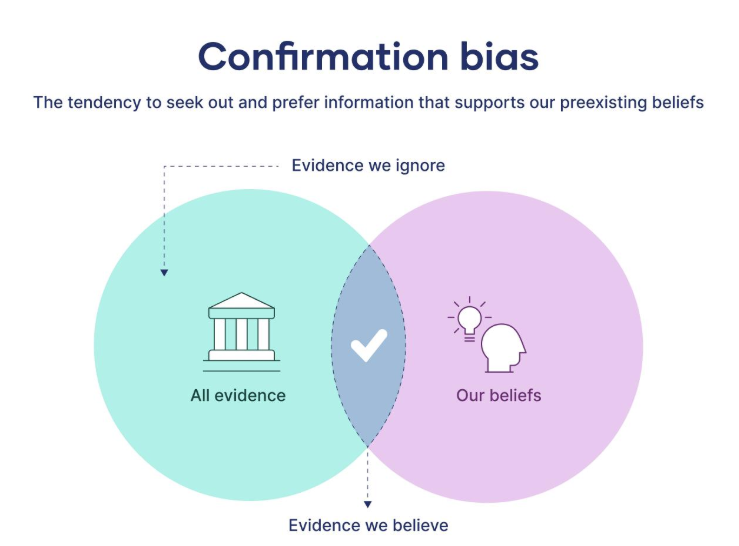
Confirmation bias encourages people to notice information that supports existing beliefs while overlooking contradictory evidence.
Overconfidence leads decision-makers to place excessive trust in their own predictions, even when objective accuracy is modest.
These biases affect every industry, but education presents unique challenges because leaders regularly make decisions involving children, families, and communities where emotions naturally run high.
Recognizing these biases does not eliminate them, but it makes organizations less vulnerable to their influence.
From Intuition to Evidence-Based Leadership
Experience remains one of a school leader’s greatest assets.
However, experience alone is not enough.
One experienced principal may believe that extending school hours improves learning because it worked in one community. Another may conclude the opposite based on equally convincing personal experience elsewhere.
Neither observation is necessarily wrong.
The problem is that isolated experiences rarely tell the complete story.
Evidence-based leadership asks a different set of questions.
What do multiple years of enrolment data suggest?
How do attendance rates compare across campuses?
Which professional development initiatives consistently improve teacher retention?
Which parent engagement programs produce measurable improvements in satisfaction?
How do literacy outcomes change after curriculum adjustments?
These questions replace anecdotal decision-making with systematic learning.
Importantly, data should not replace professional judgment. Rather, it should strengthen it. The most effective leaders combine practical experience with reliable evidence, allowing each to inform the other.
Better Questions Lead to Better Decisions
One of the most practical applications of probabilistic thinking is learning to ask better questions.
Educational organizations often seek definitive answers.
Should we build another campus?
Will this curriculum succeed?
Is this candidate the right hire?
These questions encourage binary thinking.
A more effective approach explores probabilities instead.
What indicators suggest this community can support another campus?
Which factors increase the likelihood that this curriculum will succeed?
How confident are we that this candidate will thrive after two years, not just during the interview?
These questions acknowledge uncertainty while producing far richer information. Organizations that routinely ask probabilistic questions are generally better prepared for unexpected outcomes because they have already considered multiple possibilities before making major commitments.
Building Organizations That Learn Instead of Guess
One of the greatest advantages large educational organizations possess is scale.
Every campus generates information.
Every enrolment cycle produces data.
Every parent survey, staffing decision, professional development program, and student assessment creates opportunities for learning.
The question is whether organizations treat these experiences as isolated events or as collective knowledge.
High-performing organizations develop systems that allow one school’s experience to improve decision-making across the entire network.
Patterns become visible.
Successful initiatives can be replicated.
Unsuccessful initiatives become valuable lessons rather than repeated mistakes.
Instead of asking, “Did this work?” leaders begin asking, “Under what conditions does this work consistently?”
That distinction reflects genuine organizational learning.
Practical Ways Schools Can Improve Decision Quality
Probability becomes valuable only when it changes behavior. Educational organizations do not need advanced statistical departments to benefit from probabilistic thinking. Small structural changes can substantially improve decision quality.

Before making major strategic decisions, leadership teams can require multiple scenarios rather than a single forecast. Instead of planning only for expected enrolment, they might prepare optimistic, realistic, and conservative projections, each with corresponding operational plans.
Important decisions should also identify the assumptions behind them.
If leadership expects strong enrolment growth because of new residential development, that assumption should be documented and later evaluated. Over time, organizations become better at distinguishing reliable assumptions from optimistic guesses.
Post-decision reviews are equally valuable. Rather than asking whether an outcome was successful or unsuccessful, effective leaders ask whether the original reasoning was sound. A good decision can occasionally produce a poor outcome due to factors beyond anyone’s control, while a poorly reasoned decision may succeed purely through luck. Evaluating decision quality separately from outcomes creates stronger long-term leadership.
Finally, organizations should cultivate a culture where updating beliefs is viewed as strength rather than inconsistency. When new evidence emerges, effective leaders revise their plans instead of defending outdated assumptions. Flexibility grounded in evidence is not weakness; it is intelligent leadership.
The Competitive Advantage of Better Thinking
School systems often compete on facilities, curriculum, technology, extracurricular programs, and marketing.
These factors certainly matter.
Yet one competitive advantage receives far less attention: consistently making better decisions than competitors.
Organizations that allocate resources more effectively, identify risks earlier, adapt more quickly to changing demographics, and evaluate new initiatives objectively gradually outperform those driven primarily by intuition.
The difference may appear small in any single decision.
Across hundreds of strategic decisions made over many years, however, those small improvements compound into significant organizational advantages.
Better thinking becomes a competitive asset.
Preparing Leaders for a World That Refuses to Stand Still
Educational leadership today is considerably more complex than it was a generation ago.
Population movements change enrolment patterns.
Technology continuously reshapes learning.
Labour markets influence teacher recruitment.
Economic conditions affect family choices.
Public expectations evolve rapidly.
No leadership team can eliminate this complexity.
What leaders can do is develop the capacity to make thoughtful decisions within it.
That requires intellectual humility, curiosity, disciplined analysis, and a willingness to question assumptions—even successful ones.
The strongest educational organizations are not those that claim certainty.
They are those that continually improve the quality of their thinking.
Leading Schools That Think Better
Perhaps the most valuable lesson from What Are the Odds?
is that uncertainty should never become an excuse for poor decision-making.
Educational leaders will never possess complete information before making important choices. Waiting for certainty usually means waiting too long.
Instead, successful organizations build processes that help them think more clearly, evaluate evidence more objectively, challenge assumptions more openly, and adapt more intelligently as new information becomes available.
In education, every strategic decision ultimately affects children’s learning, educators’ professional lives, and families’ trust.
That is precisely why leadership should never rely solely on confidence or intuition. The future will always remain uncertain.
The quality of our decisions does not have to be uncertain too.
For schools and childcare organizations committed to long-term excellence, that may be the most important competitive advantage of all.
Authored by:
Rose Morsh
BA Child Development,
RECE, Family Professional,
Mediator, Arbitrator
Running a successful school or childcare organization has never been about eliminating uncertainty. Every important decision—from opening a new campus to hiring educators, investing in technology, setting tuition, or expanding into a new community—is made without complete information. Markets change, demographics shift, regulations evolve, and families’ expectations continue to grow.
As Mark Prell argues in What Are the Odds?: A Statistical Guide to Certainty in an Uncertain World, the real challenge is not uncertainty itself. It is how we respond to it. While the future will always contain unknowns, the quality of our decisions does not have to be uncertain too. Organizations that understand probability, recognize cognitive bias, and use evidence effectively are far more likely to make sound decisions than those that rely primarily on intuition or past experience.
For leaders of schools and large childcare organizations, this lesson is particularly important. Education is deeply human, but managing educational institutions also requires disciplined thinking. Every strategic decision carries financial, operational, and educational consequences that affect not only the organization but also thousands of children, families, and educators.
The strongest educational organizations are rarely those that can predict the future perfectly. They are the ones that consistently make better decisions despite an imperfect future.
The Problem Isn’t Uncertainty—It’s How We Think About It
One of Prell’s central messages is surprisingly reassuring: uncertainty is unavoidable, but poor reasoning is not.
People naturally seek certainty. We prefer clear answers over probabilities, confident predictions over nuanced judgments, and simple stories over complex realities. Yet the world rarely behaves that way.
Instead of asking, “What will happen?”, better decision-makers ask, “What is most likely to happen, and how confident are we?”
That shift may sound subtle, but it fundamentally changes how organizations operate. Probability is not about predicting the future with perfect accuracy. It is about making decisions using the best evidence currently available while recognizing that every forecast contains some level of uncertainty.
For educational leaders, this mindset can transform planning.
Rather than assuming next year’s enrolment will increase because it did last year, leaders examine demographic trends, local housing developments, birth rates, historical enrolment patterns, competitive activity, and multiple possible scenarios.
Rather than believing a new program will automatically improve outcomes, they establish measurable indicators, monitor progress, and remain willing to adjust when evidence points in a different direction.
Thinking probabilistically replaces certainty with preparedness.
Why Educational Leaders Often Misjudge Risk
Managing a school network requires hundreds of decisions every year, yet many are influenced by predictable cognitive biases rather than objective evidence.
A particularly successful open house may create the impression that enrolment demand is booming, even if broader data suggests otherwise. One negative parent complaint can suddenly feel like evidence of widespread dissatisfaction despite overwhelmingly positive feedback. A recent staffing shortage may lead leaders to overestimate future hiring difficulties simply because the experience remains vivid in memory.
Psychologists refer to these mental shortcuts as cognitive biases, and Prell demonstrates how they consistently distort judgment.
The availability bias causes memorable events to seem more common than they actually are.
Confirmation bias encourages people to notice information that supports existing beliefs while overlooking contradictory evidence.
Overconfidence leads decision-makers to place excessive trust in their own predictions, even when objective accuracy is modest.
These biases affect every industry, but education presents unique challenges because leaders regularly make decisions involving children, families, and communities where emotions naturally run high.
Recognizing these biases does not eliminate them, but it makes organizations less vulnerable to their influence.
From Intuition to Evidence-Based Leadership
Experience remains one of a school leader’s greatest assets.
However, experience alone is not enough.
One experienced principal may believe that extending school hours improves learning because it worked in one community. Another may conclude the opposite based on equally convincing personal experience elsewhere.
Neither observation is necessarily wrong.
The problem is that isolated experiences rarely tell the complete story.
Evidence-based leadership asks a different set of questions.
What do multiple years of enrolment data suggest?
How do attendance rates compare across campuses?
Which professional development initiatives consistently improve teacher retention?
Which parent engagement programs produce measurable improvements in satisfaction?
How do literacy outcomes change after curriculum adjustments?
These questions replace anecdotal decision-making with systematic learning.
Importantly, data should not replace professional judgment. Rather, it should strengthen it. The most effective leaders combine practical experience with reliable evidence, allowing each to inform the other.
Better Questions Lead to Better Decisions
One of the most practical applications of probabilistic thinking is learning to ask better questions.
Educational organizations often seek definitive answers.
Should we build another campus?
Will this curriculum succeed?
Is this candidate the right hire?
These questions encourage binary thinking.
A more effective approach explores probabilities instead.
What indicators suggest this community can support another campus?
Which factors increase the likelihood that this curriculum will succeed?
How confident are we that this candidate will thrive after two years, not just during the interview?
These questions acknowledge uncertainty while producing far richer information. Organizations that routinely ask probabilistic questions are generally better prepared for unexpected outcomes because they have already considered multiple possibilities before making major commitments.
Building Organizations That Learn Instead of Guess
One of the greatest advantages large educational organizations possess is scale.
Every campus generates information.
Every enrolment cycle produces data.
Every parent survey, staffing decision, professional development program, and student assessment creates opportunities for learning.
The question is whether organizations treat these experiences as isolated events or as collective knowledge.
High-performing organizations develop systems that allow one school’s experience to improve decision-making across the entire network.
Patterns become visible.
Successful initiatives can be replicated.
Unsuccessful initiatives become valuable lessons rather than repeated mistakes.
Instead of asking, “Did this work?” leaders begin asking, “Under what conditions does this work consistently?”
That distinction reflects genuine organizational learning.
Practical Ways Schools Can Improve Decision Quality
Probability becomes valuable only when it changes behavior. Educational organizations do not need advanced statistical departments to benefit from probabilistic thinking. Small structural changes can substantially improve decision quality.
Before making major strategic decisions, leadership teams can require multiple scenarios rather than a single forecast. Instead of planning only for expected enrolment, they might prepare optimistic, realistic, and conservative projections, each with corresponding operational plans.
Important decisions should also identify the assumptions behind them.
If leadership expects strong enrolment growth because of new residential development, that assumption should be documented and later evaluated. Over time, organizations become better at distinguishing reliable assumptions from optimistic guesses.
Post-decision reviews are equally valuable. Rather than asking whether an outcome was successful or unsuccessful, effective leaders ask whether the original reasoning was sound. A good decision can occasionally produce a poor outcome due to factors beyond anyone’s control, while a poorly reasoned decision may succeed purely through luck. Evaluating decision quality separately from outcomes creates stronger long-term leadership.
Finally, organizations should cultivate a culture where updating beliefs is viewed as strength rather than inconsistency. When new evidence emerges, effective leaders revise their plans instead of defending outdated assumptions. Flexibility grounded in evidence is not weakness; it is intelligent leadership.
The Competitive Advantage of Better Thinking
School systems often compete on facilities, curriculum, technology, extracurricular programs, and marketing.
These factors certainly matter.
Yet one competitive advantage receives far less attention: consistently making better decisions than competitors.
Organizations that allocate resources more effectively, identify risks earlier, adapt more quickly to changing demographics, and evaluate new initiatives objectively gradually outperform those driven primarily by intuition.
The difference may appear small in any single decision.
Across hundreds of strategic decisions made over many years, however, those small improvements compound into significant organizational advantages.
Better thinking becomes a competitive asset.
Preparing Leaders for a World That Refuses to Stand Still
Educational leadership today is considerably more complex than it was a generation ago.
Population movements change enrolment patterns.
Technology continuously reshapes learning.
Labour markets influence teacher recruitment.
Economic conditions affect family choices.
Public expectations evolve rapidly.
No leadership team can eliminate this complexity.
What leaders can do is develop the capacity to make thoughtful decisions within it.
That requires intellectual humility, curiosity, disciplined analysis, and a willingness to question assumptions—even successful ones.
The strongest educational organizations are not those that claim certainty.
They are those that continually improve the quality of their thinking.
Leading Schools That Think Better
Perhaps the most valuable lesson from What Are the Odds?
is that uncertainty should never become an excuse for poor decision-making.
Educational leaders will never possess complete information before making important choices. Waiting for certainty usually means waiting too long.
Instead, successful organizations build processes that help them think more clearly, evaluate evidence more objectively, challenge assumptions more openly, and adapt more intelligently as new information becomes available.
In education, every strategic decision ultimately affects children’s learning, educators’ professional lives, and families’ trust.
That is precisely why leadership should never rely solely on confidence or intuition. The future will always remain uncertain.
The quality of our decisions does not have to be uncertain too.
For schools and childcare organizations committed to long-term excellence, that may be the most important competitive advantage of all.
Authored by:
Rose Morsh
BA Child Development,
RECE, Family Professional,
Mediator, Arbitrator
Most Talked About Posts

You May Also Like
Staff Picks

Positive Parenting Strategies - Dealing with Disobedience in Children

Grit: Why Success Is Rarely About Talent Alone
How Epigenetics and Cooperation Are Reshaping Nonprofit Education Leadership

Now Trending




Our Newsletter
Duplicate Email Found!
Well this is embarrassing... It looks like is already registered.
We have just sent an email to that address with a link to manage the subscription with us. If you don't see a message in the next five minutes, check the spam or junk folders, it's definitely there.
See you soon!

Join Our Newsletter
Hey, Thanks For Subscribing!
Please check for a confirmation message and ensure you add us to a safe email list.
If you don't see a message in the next five minutes, check your spam or junk folders and mark our emails safe for next time.
See you soon!
Duplicate Email Found!
Well this is embarrassing... It looks like is already registered.
We have just sent an email to that address with a link to manage the subscription with us. If you don't see a message in the next five minutes, check the spam or junk folders, it's definitely there.
See you soon!