Language Development: Receptive and Expressive Communication from Infancy to Early School Years


Language Development: Receptive and Expressive Communication from Infancy to Early School Years
 By Inventive Minds Kidz Academy
 Added Thu, Feb 12 2026
By Inventive Minds Kidz Academy
Added Thu, Feb 12 2026
By Inventive Minds Kidz Academy
Added Thu, Feb 12 2026
Hey, Thanks For Subscribing!
Please check for a confirmation message and ensure you add us to a safe email list.
If you don't see a message in the next five minutes, check your spam or junk folders and mark our emails safe for next time.
See you soon!
Duplicate Email Found!
Well this is embarrassing... It looks like is already registered.
We have just sent an email to that address with a link to manage the subscription with us. If you don't see a message in the next five minutes, check the spam or junk folders, it's definitely there.
See you soon!
Why Language Development in the Early Years Matters
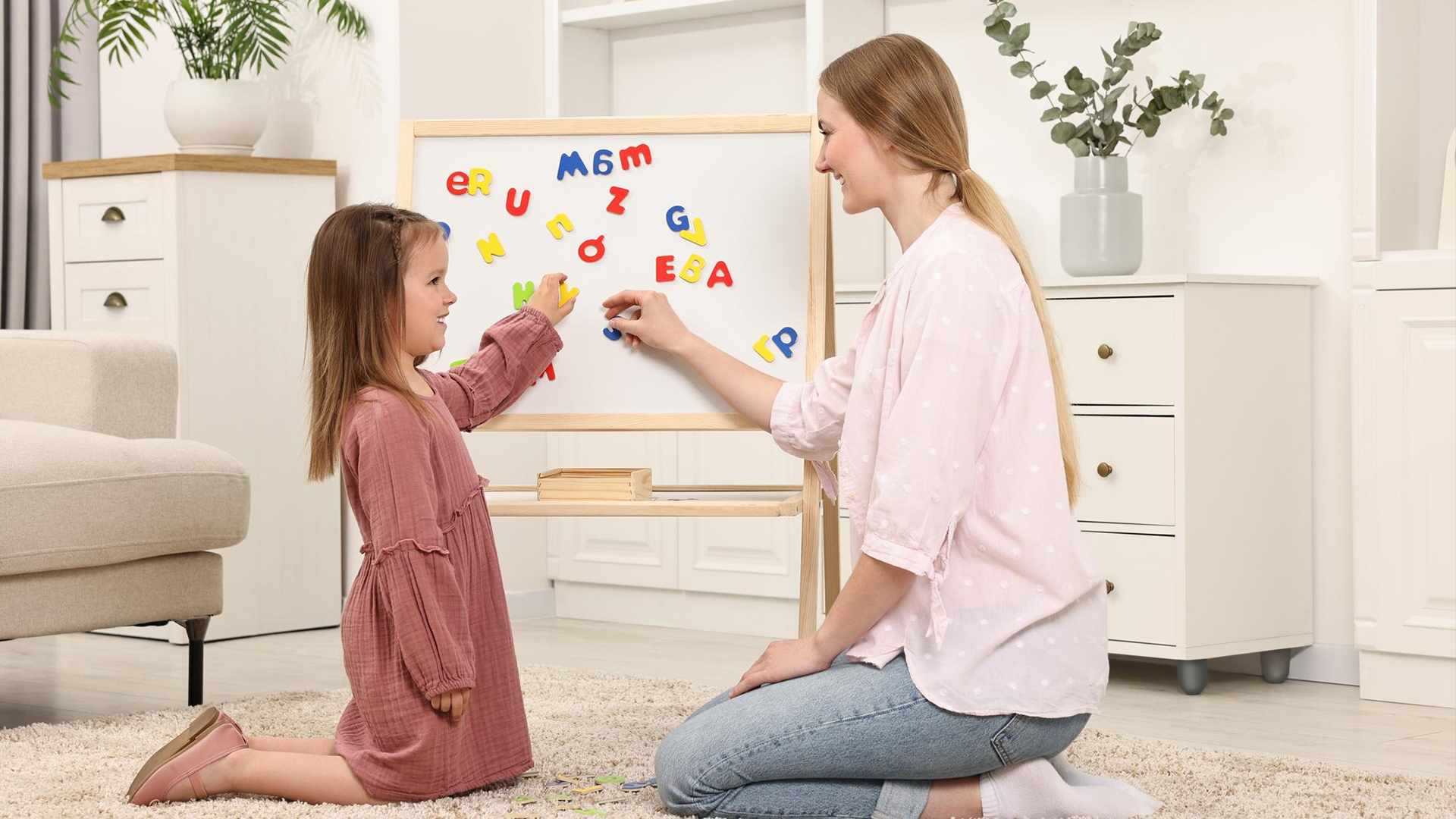
From the moment a baby is born, their brain is actively organizing itself around sound, rhythm, and human interaction. Early childhood is a neurologically sensitive period in which language-related neural networks develop at an extraordinary speed. Research in developmental neuroscience shows that the foundations of communication are established long before children say their first words, and these early foundations strongly influence later learning, behavior, and academic success (Ardila & Rosselli).
Language development is not limited to speaking. It includes understanding words, following instructions, responding to communication, and gradually learning how language works in social contexts. These skills grow through everyday interactions with caregivers and are shaped by the quality of the child’s environment rather than by formal instruction alone.
Research consistently shows that early language abilities are not only central to communication but are also predictive of later developmental and academic outcomes. Early differences in language skills can influence learning trajectories well into middle childhood (von Stumm et al.; Bleses et al.).
Understanding how language develops — and how parents can support it at home — allows families to nurture communication skills in ways that are natural, effective, and developmentally appropriate.
What Does Language Development Really Mean?
In developmental assessment frameworks such as the Bayley Scales, language development is typically described through two closely connected components: receptive language and expressive language.
- Receptive language refers to a child’s ability to understand spoken language. This includes recognizing sounds, understanding words, following instructions, and making sense of meaning in context.
- Expressive language refers to a child’s ability to communicate thoughts, needs, and ideas through sounds, gestures, words, and eventually sentences.
These two domains develop together, but not always at the same pace. A child may understand far more than they can express, especially in the early years. Importantly, strong expressive skills do not always guarantee strong receptive skills.
Healthy language development does not follow a single timetable, and children reach communication milestones in diverse ways. Rather than focusing on exact ages or comparing children to one another, it is more helpful to observe how a child uses language in everyday situations.
A key sign of healthy receptive language is a child’s ability to respond meaningfully to communication, such as following familiar routines, reacting to their name, or understanding simple instructions in context. Expressive language can be seen in a child’s attempts to share experiences, express preferences, ask questions, or engage others in play — even if speech is not always clear or grammatically complete.
Importantly, communication is not limited to spoken words. Pointing, eye contact, vocalizations, pretend play, and early storytelling are all meaningful forms of language.
Language development is cumulative and interactive. Early listening skills support later speaking, which in turn supports early reading and writing. Language is the bridge between thinking, learning, and social connection.
Understanding Differences Between Receptive and Expressive Language
One of the most common concerns parents express is:
“My child understands everything, but doesn’t talk much.”
This pattern is not unusual. Receptive and expressive language skills develop together, yet they do not always progress at the same rate.
Receptive language — the ability to understand words, instructions, and meaning — often develops earlier than expressive language. Many children comprehend far more than they can verbally produce, particularly in the toddler and preschool years.
A gap between understanding and speaking can be part of typical development. What matters most is how the child functions communicatively in everyday life. A child who responds to instructions, engages socially, uses gestures, and attempts interaction is demonstrating important communication foundations — even if spoken language is limited.
Rather than focusing exclusively on vocabulary size, parents may find it more helpful to observe functional communication patterns:
- Does the child respond when spoken to?
- Do they attempt to express needs?
- Do they engage with others?
Language development is dynamic, and many children show uneven growth before achieving more balanced skills.
Language Development Across the Early Years
Infancy (0–12 Months): The Foundations of Communication
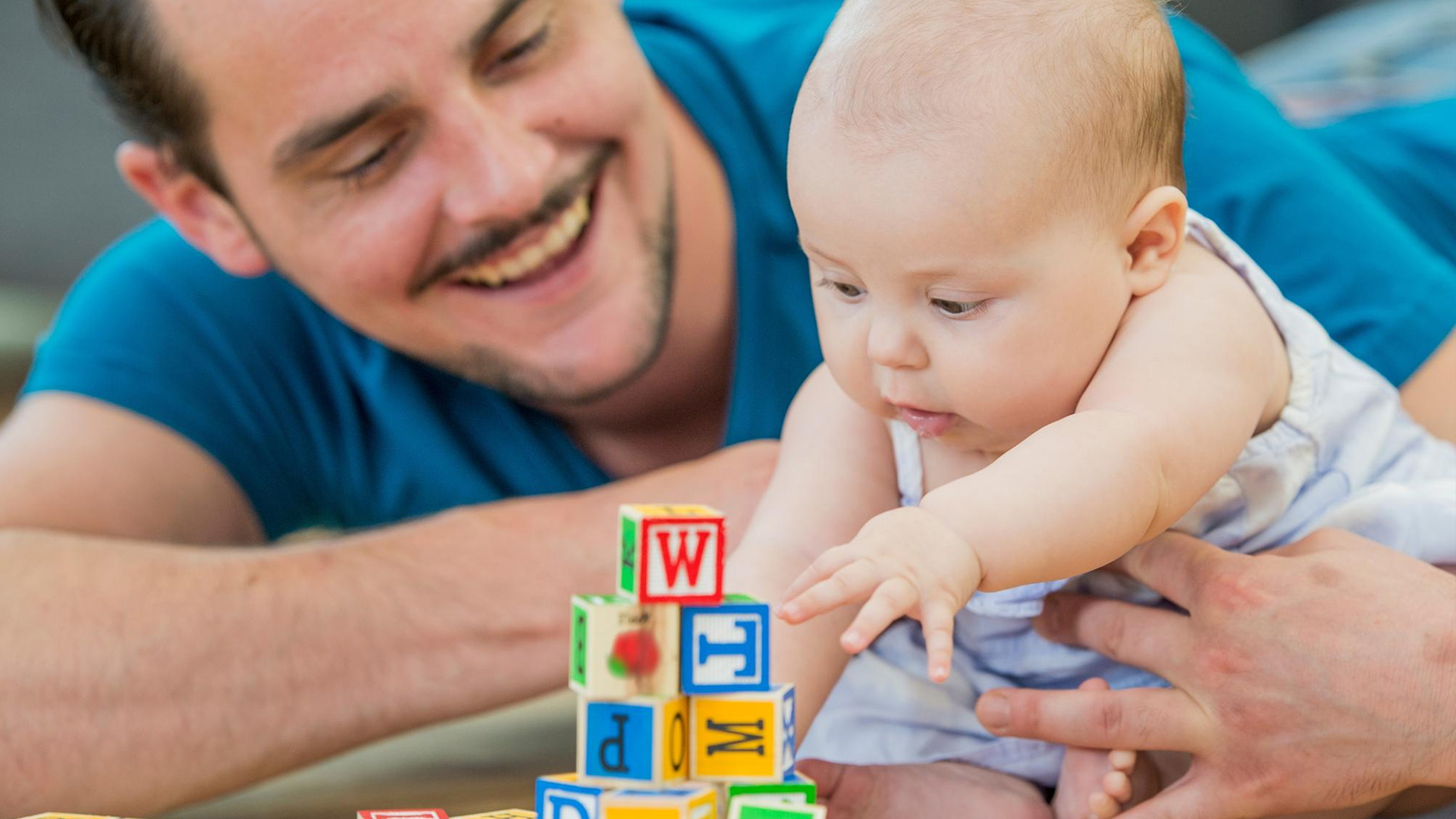
During the first year of life, language development is primarily receptive. Infants learn to recognize familiar voices, differentiate speech sounds, and respond to tone and rhythm.
Neuroscience research shows that early auditory and social experiences directly shape the neural systems underlying language (Ardila & Rosselli).
Receptive development in infancy includes:
- Attending to voices and environmental sounds
- Recognizing familiar caregivers’ voices
- Responding to their name
- Understanding simple routines through repeated language
Expressive development in infancy includes:
- Crying and cooing
- Babbling with varied sounds
- Using facial expressions and gestures
- Taking turns in early vocal interactions
Research on responsive parenting demonstrates that caregiver behaviors play a crucial role at this stage. Infants whose caregivers respond contingently and engage in shared attention show stronger later language outcomes (Levickis et al.).
What parents can do at home:
- Talk frequently during daily routines
- Describe actions, emotions, and objects
- Respond to babbling as conversation
- Read simple picture books
These interactions help infants learn that communication is meaningful and reciprocal.
Toddler Years (1–3 Years): Words, Meaning, and Early Understanding
The toddler years are marked by rapid growth in both receptive and expressive language. Children begin to understand many more words than they can say.
Receptive language development includes:
- Understanding simple instructions
- Recognizing familiar words
- Following language-based routines
Expressive language development includes:
- Using single words and short phrases
- Naming objects and actions
- Beginning to ask questions
Longitudinal research shows that early language growth is strongly associated with later developmental functioning (von Stumm et al.).
What parents can do at home:
- Label objects and actions
- Use clear, simple sentences
- Expand on child’s speech
- Use songs and rhymes
- Read interactively
Language grows best through interaction rather than correction.
Preschool Years (3–5 Years): Language Becomes a Tool for Thinking
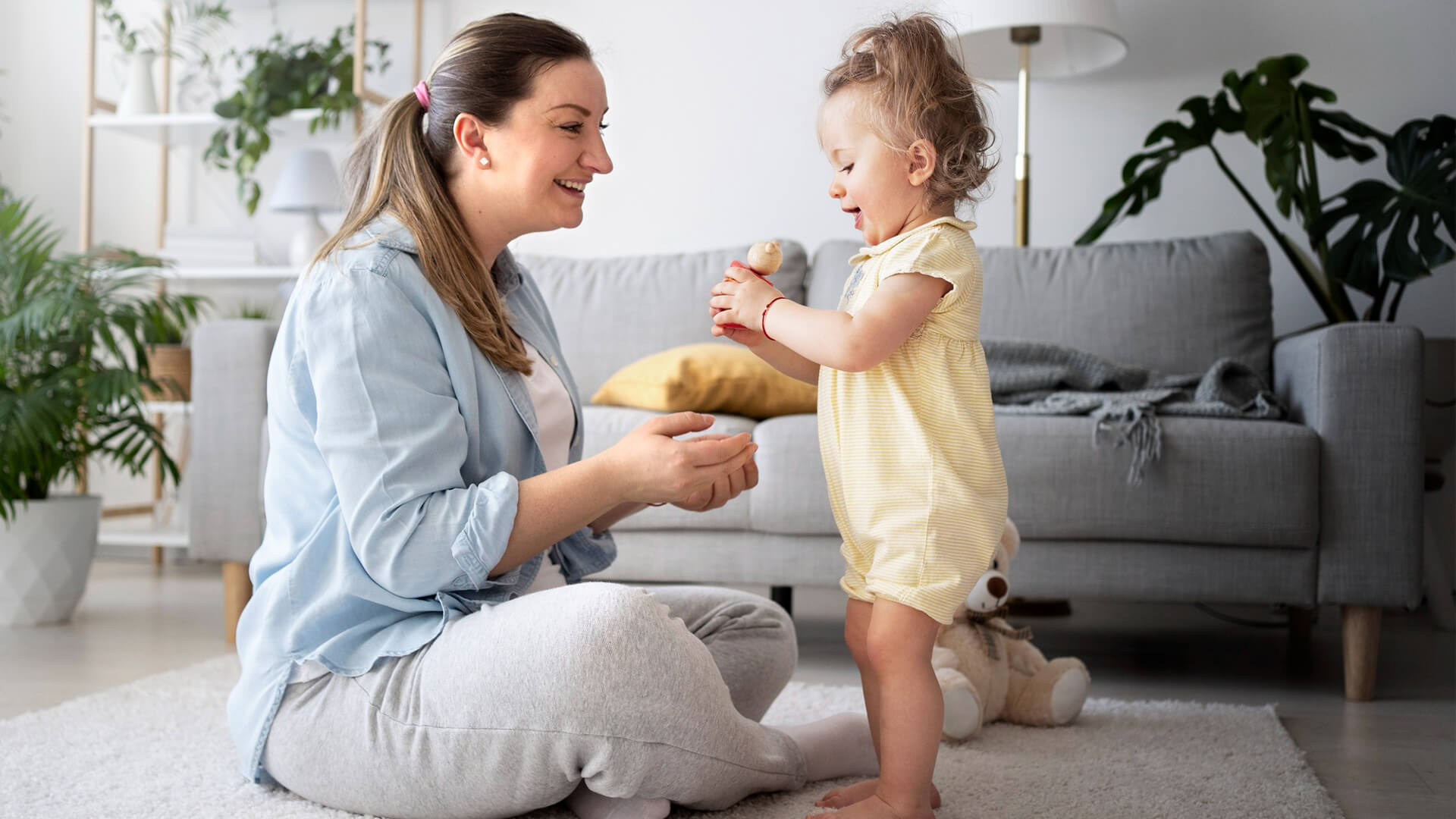
The preschool years represent a major shift. Children begin using language to organize thoughts, explain ideas, and engage socially.
Receptive language development includes:
- Understanding multi-step instructions
- Comprehending stories
- Interpreting social language
Expressive language development includes:
- Longer sentences
- Asking “why” and “how”
- Storytelling
- Pretend play
This period is critical for emergent literacy.
Emergent literacy skills include:
- Recognizing print as meaningful
- Playing with sounds
- Noticing letters
- Understanding narratives
Early vocabulary size is a powerful predictor of long-term academic outcomes (Bleses et al.).
What parents can do at home:
- Encourage storytelling
- Read daily
- Play sound games
- Support drawing & writing
- Ask open-ended questions
- The goal is confidence and curiosity.
Early School Years (5–8 Years): From Language to Literacy
Language skills become tightly linked to academic learning.
Receptive skills include:
- Understanding classroom instructions
- Comprehending narratives
- Following explanations
Expressive skills include:
- Explaining ideas
- Problem-solving language
- Writing sentences
- Academic vocabulary
Home learning activities continue to play an important role (Bonifacci et al.; South & Dutton).
What parents can do at home:
- Shared reading
- Discuss stories
- Encourage explanations
- Support writing naturally
- Focus on understanding
Parental involvement remains a strong predictor of literacy success.
When Should Parents Be Concerned? (Gentle Developmental Signals)
Language development varies widely, and differences alone are not necessarily a cause for concern. However, certain patterns may suggest that a child could benefit from closer observation or professional consultation.
Parents may consider seeking guidance if a child:
- Rarely responds to their name
- Shows limited understanding of simple instructions
- Uses very few sounds, gestures, or words
- Demonstrates minimal interest in interaction
- Appears frequently frustrated without attempting communication
- Shows regression in previously acquired skills
These observations are not diagnoses. They are simply developmental signals that may indicate the value of further evaluation.
Early support is associated with more favorable long-term outcomes, and seeking guidance reflects a proactive approach to development.
Common Everyday Mistakes Parents Unknowingly Make
Parents naturally aim to support communication, yet some well-intentioned habits may unintentionally create pressure.
Over-questioning
Frequent questioning can feel like testing rather than conversation. Language grows more effectively through shared interaction.
Excessive correction
Repeatedly fixing pronunciation or grammar may discourage attempts. Expanding on speech is often more supportive.
Pressuring verbal responses
Encouragement is helpful; insistence may increase anxiety.
Anticipating every need
When adults respond before children attempt communication, opportunities for expressive language decrease.
High screen exposure
Screens provide input but lack reciprocal interaction — a critical component of language growth.
Socioeconomic Context and Language Development
Research shows that children from socially disadvantaged backgrounds may face elevated risk for language difficulties (Ryan et al.). These findings highlight the importance of supportive environments rather than implying fixed limitations.
The Connection Between Language and Literacy
Language development forms the foundation for reading and writing. Early language exposure and shared interaction predict later literacy outcomes.
What Healthy Language Development Can Look Like (Without Comparing Children)
Healthy language development does not follow a rigid timetable. Children display diverse communication patterns. Observing functional communication over time provides a more accurate understanding than comparison.
How Early Childhood Settings Support Language Development
Early childhood settings create communication-rich environments. Educators support receptive and expressive skills through modeling, responsive interaction, and collaboration with families.
How Language Connects to Behaviour and Emotions
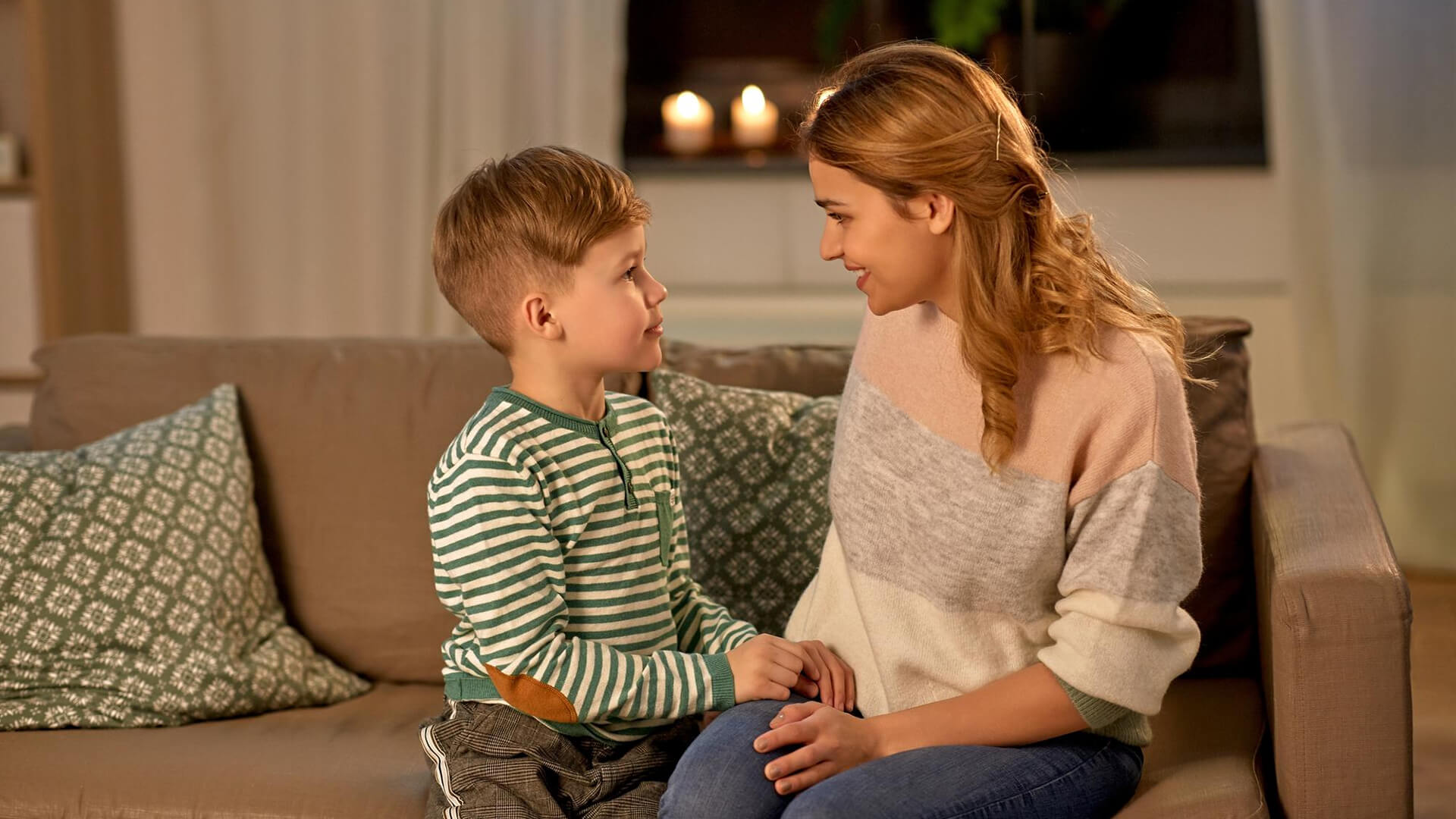
Language development is deeply intertwined with emotional regulation.
Children use communication to:
- Express needs
- Manage frustration
- Navigate social situations
When language skills are still developing, children may rely on behavior to communicate. Tantrums, withdrawal, or emotional outbursts may sometimes reflect communication challenges rather than intentional misbehavior.
Supporting language development often contributes to improvements in emotional regulation, social interaction, and problem-solving abilities.
Three Things Parents Can Start Doing Today
- Talk, listen, respond
- Make books shared
- Support understanding
Final Thoughts
Language development grows through relationships, interaction, and environment. Parents are shaping not only communication, but lifelong learning pathways.
What Truly Supports Language Growth
Research consistently highlights several powerful influences:
- Responsive interaction
- Rich conversational exposure
- Shared reading
- Play-based communication
- Emotional warmth
Language development is strengthened through meaningful relationships rather than drills or pressure. Everyday experiences — conversation, play, storytelling, routines — provide the most effective opportunities for growth.
Authored by:
Dr. Alireza Sarmadi
Family Physician
References:
-Ryan, A., Gibbon, F. E., & O’Shea, A. (2016).
Expressive and receptive language skills in preschool children from a socially disadvantaged area.
International Journal of Speech-Language Pathology, 18(1), 41–52.
https://doi.org/10.3109/17549507.2015.1089935
-von Stumm, S., O’Reilly, J., & d’Apice, K. (2016).
Predicting developmental outcomes in middle childhood from early life language and parenting experiences.
-Ardila, A., & Rosselli, M. (2020).
Neuroscience of language development.
-Levickis, P. et al. (2018).
Associations between responsive parental behaviours and language outcomes.
https://doi.org/10.1017/S0305000917000300
-Bleses, D. et al. (2016).
Early productive vocabulary predicts academic achievement.
-South, S., & Dutton, C. (2016).
Texas Association of Family and Consumer Sciences Research Journal.
-Bonifacci, P. et al. (2021).
Home activities and cognitive skills.
https://doi.org/10.1007/s10212-020-00505-6
Why Language Development in the Early Years Matters
From the moment a baby is born, their brain is actively organizing itself around sound, rhythm, and human interaction. Early childhood is a neurologically sensitive period in which language-related neural networks develop at an extraordinary speed. Research in developmental neuroscience shows that the foundations of communication are established long before children say their first words, and these early foundations strongly influence later learning, behavior, and academic success (Ardila & Rosselli).
Language development is not limited to speaking. It includes understanding words, following instructions, responding to communication, and gradually learning how language works in social contexts. These skills grow through everyday interactions with caregivers and are shaped by the quality of the child’s environment rather than by formal instruction alone.
Research consistently shows that early language abilities are not only central to communication but are also predictive of later developmental and academic outcomes. Early differences in language skills can influence learning trajectories well into middle childhood (von Stumm et al.; Bleses et al.).
Understanding how language develops — and how parents can support it at home — allows families to nurture communication skills in ways that are natural, effective, and developmentally appropriate.
What Does Language Development Really Mean?
In developmental assessment frameworks such as the Bayley Scales, language development is typically described through two closely connected components: receptive language and expressive language.
- Receptive language refers to a child’s ability to understand spoken language. This includes recognizing sounds, understanding words, following instructions, and making sense of meaning in context.
- Expressive language refers to a child’s ability to communicate thoughts, needs, and ideas through sounds, gestures, words, and eventually sentences.
These two domains develop together, but not always at the same pace. A child may understand far more than they can express, especially in the early years. Importantly, strong expressive skills do not always guarantee strong receptive skills.
Healthy language development does not follow a single timetable, and children reach communication milestones in diverse ways. Rather than focusing on exact ages or comparing children to one another, it is more helpful to observe how a child uses language in everyday situations.
A key sign of healthy receptive language is a child’s ability to respond meaningfully to communication, such as following familiar routines, reacting to their name, or understanding simple instructions in context. Expressive language can be seen in a child’s attempts to share experiences, express preferences, ask questions, or engage others in play — even if speech is not always clear or grammatically complete.
Importantly, communication is not limited to spoken words. Pointing, eye contact, vocalizations, pretend play, and early storytelling are all meaningful forms of language.
Language development is cumulative and interactive. Early listening skills support later speaking, which in turn supports early reading and writing. Language is the bridge between thinking, learning, and social connection.
Understanding Differences Between Receptive and Expressive Language
One of the most common concerns parents express is:
“My child understands everything, but doesn’t talk much.”
This pattern is not unusual. Receptive and expressive language skills develop together, yet they do not always progress at the same rate.
Receptive language — the ability to understand words, instructions, and meaning — often develops earlier than expressive language. Many children comprehend far more than they can verbally produce, particularly in the toddler and preschool years.
A gap between understanding and speaking can be part of typical development. What matters most is how the child functions communicatively in everyday life. A child who responds to instructions, engages socially, uses gestures, and attempts interaction is demonstrating important communication foundations — even if spoken language is limited.
Rather than focusing exclusively on vocabulary size, parents may find it more helpful to observe functional communication patterns:
- Does the child respond when spoken to?
- Do they attempt to express needs?
- Do they engage with others?
Language development is dynamic, and many children show uneven growth before achieving more balanced skills.
Language Development Across the Early Years
Infancy (0–12 Months): The Foundations of Communication
During the first year of life, language development is primarily receptive. Infants learn to recognize familiar voices, differentiate speech sounds, and respond to tone and rhythm.
Neuroscience research shows that early auditory and social experiences directly shape the neural systems underlying language (Ardila & Rosselli).
Receptive development in infancy includes:
- Attending to voices and environmental sounds
- Recognizing familiar caregivers’ voices
- Responding to their name
- Understanding simple routines through repeated language
Expressive development in infancy includes:
- Crying and cooing
- Babbling with varied sounds
- Using facial expressions and gestures
- Taking turns in early vocal interactions
Research on responsive parenting demonstrates that caregiver behaviors play a crucial role at this stage. Infants whose caregivers respond contingently and engage in shared attention show stronger later language outcomes (Levickis et al.).
What parents can do at home:
- Talk frequently during daily routines
- Describe actions, emotions, and objects
- Respond to babbling as conversation
- Read simple picture books
These interactions help infants learn that communication is meaningful and reciprocal.
Toddler Years (1–3 Years): Words, Meaning, and Early Understanding
The toddler years are marked by rapid growth in both receptive and expressive language. Children begin to understand many more words than they can say.
Receptive language development includes:
- Understanding simple instructions
- Recognizing familiar words
- Following language-based routines
Expressive language development includes:
- Using single words and short phrases
- Naming objects and actions
- Beginning to ask questions
Longitudinal research shows that early language growth is strongly associated with later developmental functioning (von Stumm et al.).
What parents can do at home:
- Label objects and actions
- Use clear, simple sentences
- Expand on child’s speech
- Use songs and rhymes
- Read interactively
Language grows best through interaction rather than correction.
Preschool Years (3–5 Years): Language Becomes a Tool for Thinking
The preschool years represent a major shift. Children begin using language to organize thoughts, explain ideas, and engage socially.
Receptive language development includes:
- Understanding multi-step instructions
- Comprehending stories
- Interpreting social language
Expressive language development includes:
- Longer sentences
- Asking “why” and “how”
- Storytelling
- Pretend play
This period is critical for emergent literacy.
Emergent literacy skills include:
- Recognizing print as meaningful
- Playing with sounds
- Noticing letters
- Understanding narratives
Early vocabulary size is a powerful predictor of long-term academic outcomes (Bleses et al.).
What parents can do at home:
- Encourage storytelling
- Read daily
- Play sound games
- Support drawing & writing
- Ask open-ended questions
- The goal is confidence and curiosity.
Early School Years (5–8 Years): From Language to Literacy
Language skills become tightly linked to academic learning.
Receptive skills include:
- Understanding classroom instructions
- Comprehending narratives
- Following explanations
Expressive skills include:
- Explaining ideas
- Problem-solving language
- Writing sentences
- Academic vocabulary
Home learning activities continue to play an important role (Bonifacci et al.; South & Dutton).
What parents can do at home:
- Shared reading
- Discuss stories
- Encourage explanations
- Support writing naturally
- Focus on understanding
Parental involvement remains a strong predictor of literacy success.
When Should Parents Be Concerned? (Gentle Developmental Signals)
Language development varies widely, and differences alone are not necessarily a cause for concern. However, certain patterns may suggest that a child could benefit from closer observation or professional consultation.
Parents may consider seeking guidance if a child:
- Rarely responds to their name
- Shows limited understanding of simple instructions
- Uses very few sounds, gestures, or words
- Demonstrates minimal interest in interaction
- Appears frequently frustrated without attempting communication
- Shows regression in previously acquired skills
These observations are not diagnoses. They are simply developmental signals that may indicate the value of further evaluation.
Early support is associated with more favorable long-term outcomes, and seeking guidance reflects a proactive approach to development.
Common Everyday Mistakes Parents Unknowingly Make
Parents naturally aim to support communication, yet some well-intentioned habits may unintentionally create pressure.
Over-questioning
Frequent questioning can feel like testing rather than conversation. Language grows more effectively through shared interaction.
Excessive correction
Repeatedly fixing pronunciation or grammar may discourage attempts. Expanding on speech is often more supportive.
Pressuring verbal responses
Encouragement is helpful; insistence may increase anxiety.
Anticipating every need
When adults respond before children attempt communication, opportunities for expressive language decrease.
High screen exposure
Screens provide input but lack reciprocal interaction — a critical component of language growth.
Socioeconomic Context and Language Development
Research shows that children from socially disadvantaged backgrounds may face elevated risk for language difficulties (Ryan et al.). These findings highlight the importance of supportive environments rather than implying fixed limitations.
The Connection Between Language and Literacy
Language development forms the foundation for reading and writing. Early language exposure and shared interaction predict later literacy outcomes.
What Healthy Language Development Can Look Like (Without Comparing Children)
Healthy language development does not follow a rigid timetable. Children display diverse communication patterns. Observing functional communication over time provides a more accurate understanding than comparison.
How Early Childhood Settings Support Language Development
Early childhood settings create communication-rich environments. Educators support receptive and expressive skills through modeling, responsive interaction, and collaboration with families.
How Language Connects to Behaviour and Emotions
Language development is deeply intertwined with emotional regulation.
Children use communication to:
- Express needs
- Manage frustration
- Navigate social situations
When language skills are still developing, children may rely on behavior to communicate. Tantrums, withdrawal, or emotional outbursts may sometimes reflect communication challenges rather than intentional misbehavior.
Supporting language development often contributes to improvements in emotional regulation, social interaction, and problem-solving abilities.
Three Things Parents Can Start Doing Today
- Talk, listen, respond
- Make books shared
- Support understanding
Final Thoughts
Language development grows through relationships, interaction, and environment. Parents are shaping not only communication, but lifelong learning pathways.
What Truly Supports Language Growth
Research consistently highlights several powerful influences:
- Responsive interaction
- Rich conversational exposure
- Shared reading
- Play-based communication
- Emotional warmth
Language development is strengthened through meaningful relationships rather than drills or pressure. Everyday experiences — conversation, play, storytelling, routines — provide the most effective opportunities for growth.
Authored by:
Dr. Alireza Sarmadi
Family Physician
References:
-Ryan, A., Gibbon, F. E., & O’Shea, A. (2016).
Expressive and receptive language skills in preschool children from a socially disadvantaged area.
International Journal of Speech-Language Pathology, 18(1), 41–52.
https://doi.org/10.3109/17549507.2015.1089935
-von Stumm, S., O’Reilly, J., & d’Apice, K. (2016).
Predicting developmental outcomes in middle childhood from early life language and parenting experiences.
-Ardila, A., & Rosselli, M. (2020).
Neuroscience of language development.
-Levickis, P. et al. (2018).
Associations between responsive parental behaviours and language outcomes.
https://doi.org/10.1017/S0305000917000300
-Bleses, D. et al. (2016).
Early productive vocabulary predicts academic achievement.
-South, S., & Dutton, C. (2016).
Texas Association of Family and Consumer Sciences Research Journal.
-Bonifacci, P. et al. (2021).
Home activities and cognitive skills.
https://doi.org/10.1007/s10212-020-00505-6
Most Talked About Posts
You May Also Like
Staff Picks
Key Benefits of Mediation
Asthma in Children: A Guide for Parents

Gastroenteritis In Children, What You Should Know as a Parent

Now Trending




Our Newsletter
Duplicate Email Found!
Well this is embarrassing... It looks like is already registered.
We have just sent an email to that address with a link to manage the subscription with us. If you don't see a message in the next five minutes, check the spam or junk folders, it's definitely there.
See you soon!

Join Our Newsletter
Hey, Thanks For Subscribing!
Please check for a confirmation message and ensure you add us to a safe email list.
If you don't see a message in the next five minutes, check your spam or junk folders and mark our emails safe for next time.
See you soon!
Duplicate Email Found!
Well this is embarrassing... It looks like is already registered.
We have just sent an email to that address with a link to manage the subscription with us. If you don't see a message in the next five minutes, check the spam or junk folders, it's definitely there.
See you soon!